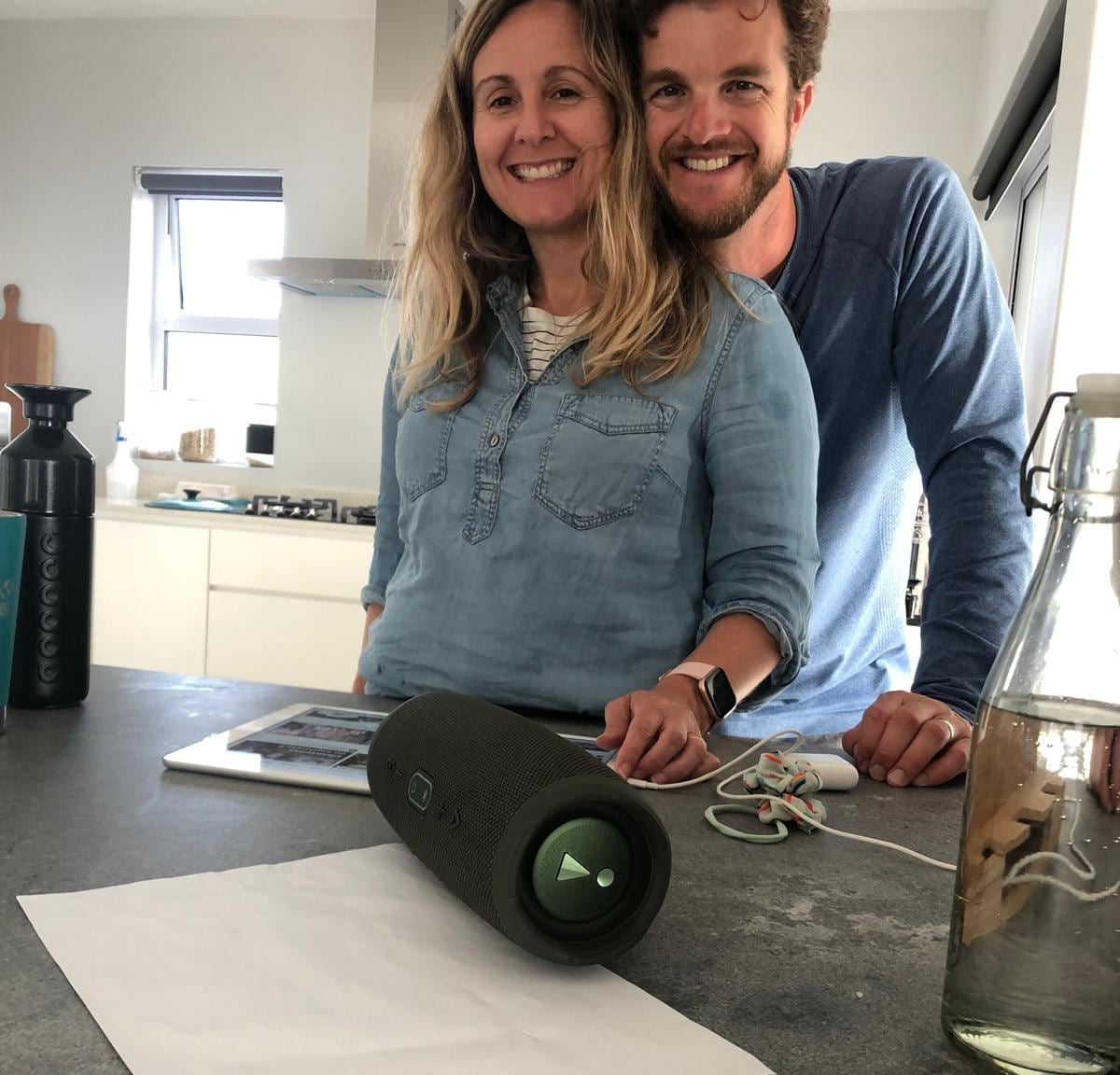
Addressing the Anti-Natal Culture in Restaurants... And The Solution
July 17, 2026 · 36 min · with Brad and Aubree Stafford
Show notes
Why are restaurants popping up that are banning kids? Why does it seem like whenever you go out to a restaurant (if you do at all) kids aren't welcomed?
Yes...it's the culture. We go into several reasons why society is anti-natal, but more importantly...we talk about solutions that parents can do right this second to fix the situation.
And some of those solutions are going to touch third rail parenting issues that need to be addressed.
Join us for today's episode of Outside The System!
Transcript
The whole conversation, 36 minutes, to read or search.
The opening clips, from later in the episode
Brad
Public school's terrible. Of course, public school's terrible. What's the solution?
Brad
I think it goes back to that individual, very selfish state.
Aubree
And which is kind of rare, because not as many people have their kids playing outside anymore.
Brad
Welcome to Outside the System. I'm your host, Brad Stafford, with my wife Aubree.
Aubree
Hello.
Brad
Sponsored by Anyone Can Homeschool. Today, and I mentioned it to you briefly, I read an article that I thought was really interesting. And there's a couple of cultural implications, but it's also, especially from a Christian worldview, what are some solutions to that problem? And the article was essentially saying more and more restaurants are becoming kid-free. Okay, so we're seeing a resurgence. Is it a resurgence, or just a pivot, maybe?
Aubree
Yeah, into kid-free dining.
Brad
Into kid-free dining. And so I guess some of the questions are, number one, culturally, why is that happening? And then what can be some of the solutions? So culturally, my first cultural thought is we live in an anti-natal society right now. Very individualistic, very anti-kid, very selfish. Obviously pro-abortion, that's like the biggest cultural phenomenon that's happening right now.
Aubree
Yeah, I think there's lots of different reasons why people aren't having kids as much anymore. But obviously, it's a whole individual thing. So I think people think that having kids is more of a sacrifice than it is a blessing. But from a non-Christian point of view, I think people don't think they get enough out of having kids to be worth the sacrifice for them.
Aubree
So I think it's interesting, because I don't think many people that don't have kids go into it. Obviously, you have some people that are like, "I just don't want any kids." I think a lot of people just wait too long. And they think, "Well, I have all this time." And I think that goes back to the thing we were talking about before, where people in the world now, we just live in the present moment all the time. And so we don't ever think that there is a time constraint on something. So a lot of women, I think, don't necessarily not want to have kids. It's just that they get tricked into thinking that building a career is more important. And then the interesting part too is, is it gonna be easier to walk away from your career at 35?
Brad
Yes, and it's not, because at that point, one of two things has happened. Number one, you've started to make good money, so your lifestyle has changed. Or number two, you are on the verge of making good money, and so you don't want to change, because you've already invested all this education and the work in that career path.
Aubree
So I think a lot of the women kind of get tricked into thinking they have all this time. And then when it comes to the time that they do want children, it just takes a lot longer for them to have children. But we live in Florida, where there's all the 55-and-over communities, where a lot of people don't actually want to have kids around. And it's interesting for us, because obviously we have a lot of kids, and we live in a place where there's not a lot of kids.
Aubree
There's more people in our neighborhood that are retirees. And we've noticed you either have people who love having kids around. Our kids play out in the neighborhood, and we have some neighbors that are like, "Oh, I love it when your kids are outside. It reminds me of when I was young," or when they had kids. Which is kind of rare, because not as many people have their kids playing outside anymore. Or you have the people who literally see kids as an everyday annoyance.
Brad
Nuisance, bothersome, loud, interrupting my television watching.
Aubree
I don't know. But we've definitely seen that, because I think Florida is a very saturated place of people who are in the retirement age. So it's not a real snapshot of normal life, I think. No, I don't think so. So you get a lot of... I mean, there's The Villages, those places where they really are just people that do not have kids around. And when you think about that, you're like, so what are you saying was so terrible about a child? And the funny part too is that we were all kids. Everyone was a kid at some point. It's so weird.
Brad
Just like everyone has two parents, everyone was a kid at some point.
Aubree
Right, but basically they find it just annoying to have kids. So they don't like the noise, or maybe they don't like just the inconvenience of having to manage that.
Brad
I think it goes back to that individual, very selfish state that says, "I've already raised my kids." It goes back to what we've talked about, and a lot of other people have talked about, as, "Okay, they're 18, not my problem anymore. It's over." And I feel like, especially with our age and our friend group anyway, it seems like we're aware that that's actually bad for society. It's bad for our kids.
Brad
It doesn't work out, other than feeding what will be a very lonely end of life for a lot of these older people, because we have neighbors where nobody visits them. No kids visit them. Their kids either don't want anything to do with them, or they just are saying, "You dropped me when I was 18. Why am I gonna come back when you're in your 70s and have to take care of you, or have to even consider you? Let me just stuff you in a home."
Aubree
And both of us, we have great parents. But a lot of people's parents that we've heard, the parents actually don't really want to be inconvenienced to even babysit their grandkids. Which to me is just wild. And not that we're hating on the boomers, but it does seem like there is right now, maybe not a tendency, but it does happen regularly that grandparents really don't want to be burdened with the responsibility.
Aubree
And obviously, we live in such a different time, where people don't live around family often. So people have to do a lot on their own. And I think another reason, you're talking about why are people so anti-child, because not everyone's anti-child, but you know what I mean, people don't grow up around kids. So if you look at just our family, both of our parents come from at least four kids in the family. That's the least. And so they grew up around kids more. But both of our parents had only two kids. And so with us, if I hadn't had a lot of cousins, I wouldn't have had kids around. But you, I think Micah was the first baby you ever held.
Brad
He was in the top one. He was pretty much the only one.
Aubree
You had never held a baby, taken care of a baby. And I had my aunt and uncle who lived right next to us. So when I was a teenager, I had their three boys that I got to spend a lot of time with. So I was definitely more comfortable. But I think I've heard that as a reason: if you think about it, you don't know. So it's kind of like, weirdly, since we've all been kids, but still, children are like the other. You don't really know them, you don't know how to take care of them. What do you do with them? And so I think that's a big reason too. Instead of like our kids, they can't wait to have their own kids.
Brad
But I think the other thing to consider, this is always something that we point out as a trap for people, and I think we mentioned it on the last podcast, was you're overscheduling and keeping your kids so busy, because that's really what our generational parents did to us. It was outsourcing of school, outsourcing of sports, outsourcing of this. It was a major outsource. And I feel bad for them, because I don't think they had good discipleship to say, "Let's just pause before you get your kids into all these activities and say, is this a good idea? Or are these activities appropriate for your kids, to be separating the family time in order to accomplish..."
Aubree
But don't you think they were doing it a lot because they didn't get to do those things, in a way? And so then they wanted their kids to have this amazing experience. So I think it's kind of like that weird pendulum swinging, where you have a big family, and also they're getting all the propaganda of consumerism coming at the same time. So they were in the time where, I can remember my mom saying when she was allowed to wear jeans, and it became like jeans were a big thing. So they're just starting all that consumer stuff. So then they have kids, and they want to give their kids all these things. And I think that's another big reason people aren't having kids, is because it's expensive.
Aubree
And it is expensive. I mean, I think having adults eating now is a whole nother thing. I feel like when our kids were younger, obviously it's a mouth to feed, but it's not the same as an adult mouth to feed. And our oldest is 18. The eight-year-old still wears his clothes. So we've passed on all their clothes. We don't often buy clothes.
Brad
Hold on, Julia was in an Eliza dress. That was so cute.
Aubree
Yeah. Well, I mean, we have to buy things like bathing suits. My one fail as a mom is socks. I cannot manage to keep socks [unclear].
Brad
I have to manage my own socks.
Aubree
It's terrible.
Brad
I roll them up, and I'm like, "I don't even care if they get fully clean. I'm not losing a pair."
Aubree
But yet somehow... well, and I think because our kids don't wear shoes that much, to be fair. And they didn't in South Africa at all. Like, rarely. And so there weren't that many socks. And then here in Florida, they pretty much just wear socks when we go to church. But they will show up... Isaac wore those socks that look like knee-highs the other day, and the heels were up by the back of his calf. So that's my mothering fail.
Brad
But from a consumption standpoint, we try to keep it really, really low. Wherever we can, we're kind of tightening our belts.
Aubree
Right. Certainly, you have to buy bathing suits for each kid, and obviously underwear.
Brad
But I think, and talk about the pendulum swing, the anti-natal is partially because it was so expensive, but back then there was no limit to toys and clothes, and so it was like the [unclear]...
Aubree
Well, if you only have two, it's a lot easier to give those two kids everything you think that they would want. And so you let them play all the sports that they would want. You give them as many dresses and shoes as you want, because I really do think that they were trying to intentionally give... I say "they," not just our parents, but I think that generation, because we were not the only ones. When we were growing up, there were so many kids that we knew, that we went to school with and played sports with, that had just two siblings, and they were nearly the same ages too, like three and a half to four years apart. So I think that age group, they really planned things out. So I think that they wanted to give their kids the best they could.
Brad
The intention was good, but I think it led to a lot of narcissistic people, a lot of individuals.
Aubree
They just cut their families off now. Okay, so now they have these... I mean, there's lots of people that we know that don't have any relationship really with the parent or the child. And I think it goes back to, we talked about the fact that we all are so focused. We live in an expressive individual culture where we all think that we are the main character.
Brad
Yeah, main characters.
Aubree
Yeah, but it's like we all think for everybody.
Brad
Yeah, which makes it very anti-natal, because you're sacrificing for your child. Which, to go back to the restaurants, nobody wants to have kids around when "I've already made the sacrifices. I want to have the nicest meal possible. I don't want to have..." Sort of like when you're flying on a plane and you have a kid and they're crying, and someone gives you the look, and you go, "Let's fight."
Aubree
Wait, or, "Do you think that I want the kid crying right now? Do you think I'm having fun?"
Brad
That's right.
Aubree
How many times I have to give that look, like, "Do you think I'm having fun right now?"
Brad
You think I'm pinching the baby? We are on an 18-hour flight. Do you think I want them to be crying right now?
Aubree
Our kids did really well still.
Brad
Yeah, it was still difficult.
Aubree
But I also listened to a podcast the other day, and the person said, just imagine, every child born now is desired in such a different way than our parents' generation, where a lot of people had their surprise baby, or they just had children. It was a part of the normal life, was having children. Now every single child is... maybe not every single child, but the majority of children are desired, where the parents want a child. It's like a project.
Brad
Well, it's because it sort of goes into the planning. It goes into the "This is my trajectory. Well, we're gonna be married for this many years, and then we're gonna decide to start to have kids, and then we're gonna do it. I want to do it this day. This year is when I'm gonna start having..." The hyper-planning is, I think, definitely anti-natal, because when you're not planning... I mean, you have to be wise in the things that you're doing, but when you're trying to plan everything out so aggressively, it just doesn't leave room for spontaneity. It doesn't leave room [unclear].
Aubree
Or just to see a child as a blessing.
Brad
And to see a child as a blessing.
Aubree
I think we all have a story of a person we know that couldn't conceive, and then something happens and they stop trying so hard, and they fall pregnant. So I think if you're parenting a child that is your life project, obviously you're gonna be a potential victim for gentle parenting, because this is like your king or your queen, almost, right? Where this is the thing that you've wanted more than anything in your life. And then his or her happiness is the most important thing for you.
Aubree
And as we know, your kids are gonna be mad at you sometimes. Especially with Julia. She's one, and she started pitching fits and just screaming, like a real Ringwraith kind of high-pitched scream. You get some kids that are really capable of that, where your ears are actually ringing. So she started doing this, and we've noticed with our kids, they give in so easily.
Brad
Whenever she wants, they're like, "Here, just give her the thing." She can't have that piece of glass. No, she can't have that thing.
Aubree
Or she can't drown herself in the ocean right now. That's always the funny thing that we say to each other when you hear people talk about gentle parenting, or child-led anything, when you're like, "She would just drown right now. If you let her, she would walk into the ocean and just drown."
Brad
Just child-led drowning.
Aubree
She would just go and... or so many different things. She would fall right off the bed. There's a lot of real-life examples that we all see as parents that the child cannot be determining his or her own boundaries.
Brad
Well, I think that sort of... and that kind of leads into really where I think it's easy to point out and discuss all these things to a certain extent and say, "Well, how do we get here?" But then it's, "Well, what are the solutions?" Because there's a lot of online, "Public school's terrible." Of course, public school's terrible. What's the solution? What do you do about it? So, homeschool.
Brad
But let's just use restaurants as kind of the topic, because we used to go out to eat quite a bit in Cape Town, and it was very nice. We enjoyed going out with our kids. Our family was a joy to go out with. So how do we sort of combat the anti-natal, no-kid restaurants? Well, so number one, start your own restaurant and just make it a kid restaurant.
Aubree
Like, okay.
Brad
Okay, start your own business, make your own restaurant, say, "We want all the kids. We want all the kids to be around here." Step two is to actually, sort of like with Cape Town... Not so much now, but I think early, it was a very kid-friendly place. So if you're in an un-kid-friendly place, your options are start a kid-friendly restaurant, or move to a place where there are kid-friendly areas. So, like Florida, because it's older, you're not getting as many kid-friendly areas. But if you go to, I don't know, Greenville or some... I don't know where.
Aubree
I don't know either. We haven't really found it.
Brad
Tell us where there's high, high kid...
Aubree
Because in Cape Town, there's your restaurant outside often, and there's an outside area, and then they have places for the kids to play. So it's much more of a... it's not a high turnover. You're not trying to just turn over the tables all the time. You're sitting there, you're chatting with your friends, the kids are playing together. So it's a different ambiance completely than going into just a restaurant.
Brad
Yeah. And sitting there at a Chili's, sitting in the booth with your kids.
Aubree
And I mean, that directly plays into it. Like we were saying, if your kids are not well behaved, no one's gonna want them at a restaurant.
Brad
That's the third solution: manage your kids. Manage them. From a biblical standpoint, we are given the duty to raise our kids. You're given the duty to set those boundaries.
Aubree
And educate them, yeah.
Brad
To educate them, raise them in fear and admonition of the Lord. The Bible is loaded with all these things that point the opposite direction of gentle parenting, right? Towards having, not strict, but a framework. Firm framework and boundaries in which you have to raise your kids. So a lot of these anti-natal restaurants, I don't blame them, because you go out to dinner, you go out to eat, every single... To be fair, we have not been out to eat. But when you go out, even just to go out to the grocery store, you're seeing parents, instead of managing the kid's behavior, which starts at home, starts when they're one, they're giving them a phone to sit still in a restaurant.
Aubree
Or in a grocery cart.
Brad
Walking around the grocery store, doing anything. I saw a video of a little girl who was basically carrying her iPad in one hand, chasing after her mom, excuse me, ended up grabbing onto the dress of a different lady and walking around, didn't take her eyes off the iPad. And the lady is walking, and she sees that she's pulling her dress, and she goes, "What are you doing?"
Brad
That is a problem. That is the exact opposite, especially from a Christian standpoint. We want to say, how can we make an impact in the culture, in the world? Get your kids under control. They shouldn't be running around like crazy people. They shouldn't be throwing temper tantrums in restaurants. If they're throwing temper tantrums at restaurants, you're not figuring that out at home.
Aubree
Well, I think that's why, to prevent them from throwing the temper tantrum, people just give them the tablets. The tablets or the phones. And I feel like, as a mom, I think what happens for a lot of the women, because obviously it's all over social media, but it's not new. I mean, think about the hippie generation. You think gentle parenting was new? The hippie people, they completely... There's lots and lots of boomers who raised their kids. We're living in a society of people who didn't get spanked.
Brad
That's it. That's what it is.
Aubree
And yeah, so I think the idea that you're being more loving... because I think a lot of it comes from people, we've known a lot of people who maybe were not spanked appropriately. And so then they decide to over...
Brad
Yeah, they were not spanked. They were beaten. It was abuse.
Aubree
It was a parent spanking out of anger. So then they decide they're not going to spank their children at all. And the difficult part is that children have to have a consequence. And so if you're not gonna spank, time out is not a consequence. Putting a kid in the corner... you put a two-year-old in the corner, they don't learn anything.
Brad
It doesn't register, not only not necessarily quickly, but effectively.
Aubree
And I think the hard part too is, for a lot of moms, they really haven't had a situation where they really realize that the consequences of not disciplining your children are really, really severe consequences. We've known situations where you have a child that is full-on being gentle-parented, where you talk to the parents, you know what their parenting philosophy is, and you see what happens when the child isn't disciplined. So we've seen horrible biting. Biting to the point that the child, the victim, has bruising and teeth marks, repeatedly.
Aubree
And I think when most parents see that, you're like, "Okay, something's not working here." And then when it's your child that's the victim, I think that does give people sort of the shake they need sometimes to just say, "Okay, you can't just let a child work it out for themselves without any type of guidance of what's acceptable and what's not." And so you can see these parents that I think they do mean well, but they're trying to rationalize with a two-year-old or a three-year-old. And you can see that it's not making any type of impact on the child. The child looking at anything else, not listening, the mom... It doesn't register. And often I think the poor mom doesn't know what to do.
Brad
Well, I think that's the biggest thing. In that situation that you're talking about, I know we know those people, obviously. They're nice people, come from some terrible family situations, where they went the opposite end of the extreme, and they're now producing the opposite end of the extreme from them, which was also an extreme. But they didn't have anybody to say, "Okay, how do I..."
Brad
Even for me, I never had anybody, because I didn't get spanked nearly enough. I always tell my parents, "You should just whoop my butt. You should have broke a belt over me." But I didn't have anybody to say, "Hey, this is actually how you need to discipline." And especially if you're homeschooling, it's not just the dad's responsibility to discipline, because then what happens is the homeschool is just like this, because they know mom's not gonna actually deal with the discipline that needs to be dealt with. And then from a dad's perspective, how do you discipline? You yourself need to be under control. There needs to be a clear path of, especially, a biblical, righteous discipline that ends in "I love you, and I'm giving you a hug." It's not punishment.
Aubree
But I think that's the thing people get confused on. So when you have the gentle parenting philosophy, they compare that to punishment. They see that anything other than just pure kindness and trying to reason and talk your child through things is punishment. But it's really not, because what you're trying to do is you're trying to teach the child self-control. That is really what you're trying to teach at the end of the day. It's just self-control. And the consequence has to be something that, when the next time the opportunity to do that behavior rolls around, the child has a little bit of a pause and says, "Oh, if I do this, if I bite my sister, I'm gonna get a spank."
Aubree
And so I think the idea that it's more loving to not discipline, to me, is actually the antithesis of love. Well, because what you're doing is you're basically making it seem like the child has to figure that out on their own when they're an adult. So it's not like all of a sudden one day your child turns 10 and they're like, "I figured it out. I figured out self-control on my own." You know what happens when you have a teenager who has no self-control, right?
Brad
I can tell you. I have a history of that. It's me. I know that guy. I'm him. He's me. We're the same guy.
Aubree
And you can say it's much harder.
Brad
It is much harder. And [unclear] way older to have self-control. I mean, those early years are foundational to help develop that self-control. It is a fruit of the Spirit, certainly. However, especially as a parent, you're teaching that to them, and this is the way that the Bible gives us that framework of actually how to do that.
Brad
Because if you don't discipline them, then the state will discipline them. So either you set boundaries to help them understand how to control themselves, or the state will. Or the consequences of drinking and driving will, or the consequences of drugs will, or the consequence of whatever, all of these different consequences. So it really is... the idea behind gentle parenting, I understand. But it's just not, and it's definitely not biblical.
Aubree
And it's also not fruitful, because the fruit that you get from it is not... you can see it goes hand in hand with the fact that no one wants to have kids anymore, and no one wants kids around anymore. And that happens to coincide with the huge rise in gentle parenting, right? A huge increase in people believing that that is the best way to raise your children and discipline your children. And I think, for us, because from a biblical worldview, we're definitely operating from the sense that you must teach children what to love. You have to teach them what is good, you have to teach them what is valuable, you have to teach them virtues. It doesn't happen on its own.
Aubree
So I feel like we've had a lot of interactions with people who definitely aren't Christians, and that's one of the things. I think you can have a lot of things in common with someone, but then what you actually think about a child... And we obviously love children. We've had a lot of them, and we love them. We're children fans. I enjoy being around children all the time. I really, really do. But the idea that they are inherently good is just insane.
Brad
Like, they're going to choose good? No, they're gonna choose candy. They're gonna choose walking into the ocean. They're gonna choose walking around with a fork in their mouth when they're learning to walk.
Aubree
That's what they're going to choose to do. That's what they're gonna do, right?
Brad
And those things aren't necessarily bad or evil, but it's just that they need to be able to do that. The consequence of those things are bad.
Aubree
And they just have to be taught how to do that. And so I think people have a... obviously it's a challenge to raise a child. But it's one of those things where, and I say this to ladies all the time, you're not going to regret having a child. Those rare times you see those wild things where those women say that, it's absurd. I think you're gonna have a lot more people who regret not having children.
Brad
Yeah, I've seen that much more.
Aubree
And I think for us, the idea that you would say that children are not allowed someplace is wild, just in itself. That you could say that any people are like, "This person, you're not allowed to be able to do something."
Brad
So for society to continue, we have to ostracize how society will continue.
Aubree
That's kind of what it is. The natural... a society is humans in all their forms. Generationally, babies.
Brad
Yeah. No, I think it's definitely an issue, and again, I sort of look at myself, and I give myself and a lot of people grace, because there's no... that generational wisdom, from a father's perspective, of how to discipline their kid well, that is rarely passed down well, generationally speaking. So a lot of people, you might be watching this and say, "Well, my dad beat me," or "My parents didn't spank me." Okay, well, what are the consequences of both of those things? And then look to the Bible specifically for instructions on how to do it well and how to do it right, that produces generational kids who understand they have to discipline their kids.
Brad
Because I think that's the other thing, with a lot of the grandparents, they're dealing with the consequences with their own grandkids, where they're like, "I don't want to be around this little rat. This little brat kid doesn't listen." The parents don't hold them accountable. It's not fun for anyone. It's not fun for a grandparent to spend time with little Timmy when Timmy is a jerk and just eats whatever he wants and doesn't respect anybody and doesn't listen. So in that sense, it's actually not only loving your own family, but it's your own kids. It's actually like fifth commandment: loving and honoring and obeying and respecting your parents by raising kids who love and honor and respect.
Aubree
Maybe we should do the next podcast on the books that may be helpful.
Brad
Or you can just shoot us an email. Send us an email, brad@anyonecanhomeschool.com or aubree@anyonecanhomeschool.com.
Aubree
I even think for me, when we were first having Micah, I read Babywise. It's kind of a polemic kind of book, because it's sort of the same thing with babies. So people read a book like Babywise and they're like, "Oh, how dare you let your baby cry." And so you have the other end of the spectrum, which is basically baby-led everything. Which I've kind of done a mix. I mean, I feel like when you have a newborn, you're definitely not gonna leave it.
Brad
Baby-led [unclear] is what I'm a big fan of.
Aubree
But the thing is, with Babywise, I can remember it just being like, "Okay, this makes sense." The parent has to set the tone for the home, but the parent has to direct things. So the parent has to say, "This is when the baby will sleep." You cannot make the baby fall asleep, but you can decide that this is when the baby's going to sleep. You can put all of the things into position that facilitate the baby falling asleep. And when you do that, I can tell you from experience, everyone's happier. The baby's happier, the parents are happier, the siblings are happier, you're sleeping more, the home runs smoothly. You're not owned by a little person.
Aubree
We've had a lot of friends too that, sleep is a hard thing for the parents, a baby or child trying to direct how much sleep they need, right? If you have a child that's two years old and the child thinks it doesn't need a nap anymore, as a parent, you have to say, "Well, you need a nap still. You actually need a nap. I know why you need a nap."
Brad
Six o'clock is telling me, the way that you're melting down.
Aubree
I feel like that's honestly one of the things, if people are listening with kids, one of the things that you can start doing, if you do feel like you're in over your head with your kids right now, is to get them sleeping more. Just to start making them take naps, to go to bed earlier. Quiet times, for us, if they're older. But even just, your kids need more sleep than you're thinking. And you can't expect a child to have self-control and to actually calibrate their own mood if they're sleep-deprived.
Aubree
So I would say for me, that is my number one tip. [unclear] Work on getting your children sleeping more, you sleeping more. And that will be the first step to trying to overcome any discipline issues that you have. Because then you can start, once you know everyone's sleeping well and the child's sleeping adequately, then you can start dealing with disobedience or attitude issues. But if they're not well rested, I feel like it's not even worth it starting.
Brad
It's like the Snickers commercial, where somebody's a completely different person, and then you're just like, "Here, you're hungry." That's kind of a lot of women. Like, you just have to feed them. But children, from literally almost every example from our 18 years and multiple countries and people and all this stuff, 99% of the time, this kid's tired. You woke them up too early, they didn't take a nap, they go to bed too late, they miss their sleep windows, then that cycle just continues and it sort of compounds. And I think that the difficult thing is, it's almost like the withdrawals of having to deal with fixing all of that is just too much. So people say, "Oh, that's just how they are. That's just how we are." And that's just not true.
Aubree
No, and it means that you're gonna have to probably stay home more than you want to stay.
Brad
It's gonna change your schedule, right? But it's gonna change your going out.
Aubree
It's so worth it, having well-rested children.
Brad
100%.
Aubree
I think, yeah, it's a hard one if you think, okay, people are gonna take their kid out to a restaurant and it's like six o'clock, and the kid didn't take a nap, and you're wanting to sit still at a table.
Brad
Of course everybody's gonna be mad at your kid. I'm mad at your kid. Get him out of here. Put that kid down for a nap. That's ultimately what it is.
Aubree
It would be cool if people wanted to start more family-friendly restaurants.
Brad
Yeah, I think that's a good idea.
Aubree
Outdoor [unclear]. Probably in America, everyone would have to sign over waivers to get on the play equipment, or it'd have to be, I don't know, something with a bounce house with walls all around it, but they probably could only get one at a time.
Brad
No, no, no. The only way to enter is by saying, "I forfeit all Karen rights of lawsuit for my kids having fun." That's how it would be. When you enter the premises of the Stafford restaurant, you forfeit all opportunity to sue. Kids will be kids in here. However, they will be well-disciplined kids. But they will be able to go out and have fun.
Aubree
That's a good idea.
Brad
Very good. Well, thanks for chatting. And thanks for joining us at Anyone Can Homeschool, Outside the System. Please share this podcast with friends and family. And if you have any questions really about resetting the behavioral stuff, resetting the sleep stuff, just reach out. We want to help people. That's kind of what we're doing this for, is to kind of fill that "Well, nobody told me how to do that." Now you don't have an excuse. If you're watching this, you don't have an excuse that, "Well, nobody told me how to do that." We're telling you we'll help you do that. But you do have to reach out, and we'll help you. So until next time, thank you for joining us, and we'll talk to you soon.
Cleaned for reading from the episode's automatic transcript: filler words and false starts are left out, nothing is added. The recording is the record.