Escape The System: It's About the BOOKS!
Episode 5 · July 7, 2026 · 55 min · with Brad and Aubree Stafford
Show notes
In this episode, Aubree and Brad go LIVE on video to discuss the books that were foundational in their journey from never homeschooled to teaching others how to do it well. They cover 5 books, why you need to read them, and what they’ll do for you as a parent who wants to homeschool…and STAY homeschooling.
Transcript
The whole conversation, 55 minutes, to read or search.
The opening clips, from later in the episode
Aubree
School is not actually turning out a very good product.
Aubree
So this one's The Well-Trained Mind.
Aubree
I don't know any 19-year-old boys who would write letters like this.
Brad
How terrible public schools are.
Brad
100% a must-read.
Brad
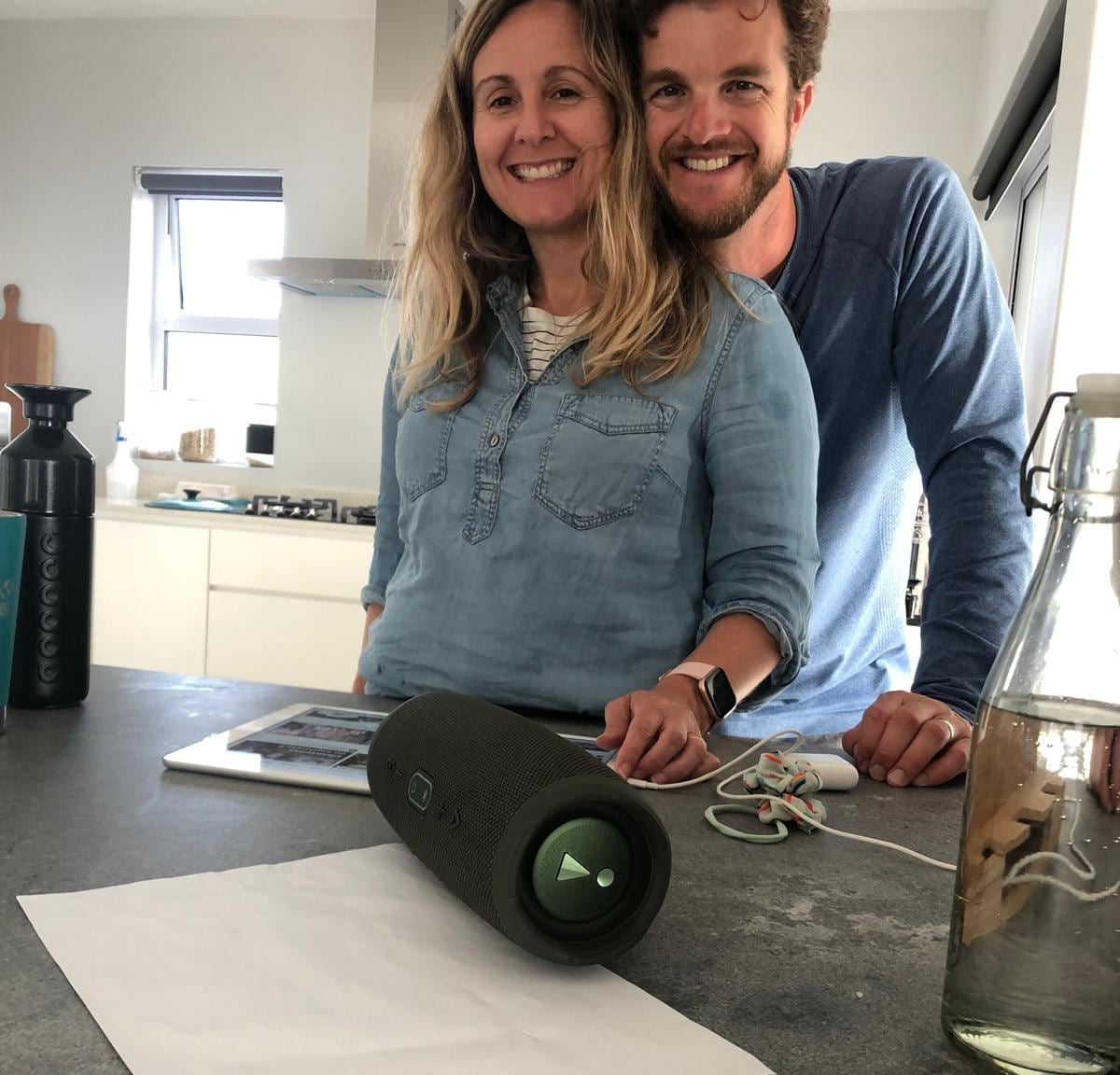
Hello and welcome to Outside the System. My name is Brad Stafford, along with my wife Aubree. This is our first video podcast.
Aubree
Exciting.
Brad
We've been mainly audio until this point, and then we've set up our studio here. And today we would like to talk about some of the books that have, I don't want to say radicalized us, but kind of pulled us from what we thought was a normal way of thinking to see the other side of reality. Right? So we see in society today just how terrible public schools are. And even private schools, they're kind of failing.
Brad
And so until really we started to go through some of these books and have these sort of aha moments, we didn't think any different. And we didn't really question, oh, this is what you do here, oh, this is what you do here, oh, this is what you do here, especially when it comes to homeschooling. So we want to go through some of the books today that we've read. This behind us is only a fraction of our library, but these are some foundational ones, and then what we'll do is recommend them all to you.
Brad
If you're homeschooling, if you want to homeschool, if you're actively homeschooling, these are just foundational books to help you to unplug from the system, have a better understanding of how we got here, I think in terms of literacy rate, in terms of math rates, in terms of just sort of a culture as a whole. And then if you have feedback, let us know. If you have some books that you want us to read or you would like us to talk about, let us know. So first, let's start at the... you were young when you first read the War Letters.
Aubree
This book, I would not say is a foundational homeschooling book, but I think I got this for probably my high school graduation or not too long after. It was copyright 2001, so it must have been just after, so I must have been like 19 years old, something like that. I got this book, started reading it, and it's a compilation of war letters from the Civil War all the way through the Persian Gulf. And I remember reading it and just being like, I don't know any 19-year-old boys who would write letters like this.
Brad
Other than me. I was a linguist.
Aubree
Yeah. But the Civil War letters were just the most eloquent letters. Even the people who made maybe grammatical errors or spelling errors, they were just descriptive and emotional, but not overly emotional, not flowery. It was just really that the people could express themselves well. And then you continue through. And it wasn't like people during the Vietnam War, their letters were terrible, but they definitely lacked a bit of, I guess, the nuance, maybe, or just the eloquence of the earlier letters. And so that kind of put a pin in my mind where I started thinking, well, I don't know anyone who writes like this.
Brad
Because I remember when we started dating and you were telling me about this as one of the... you're like, you have to read this book. And I started reading it and I said the same thing. I myself couldn't write like this in any way, shape, or form. And it's interesting to think. So first of all, most of them, especially during the Civil War, it was one-room schoolhouse or homeschooling. They were doing a lot of copyworks, it was mainly a couple of books.
Aubree
Right. So I feel like this book was definitely what kind of made me start questioning... school is not actually turning out a very good product. And it wasn't even like we were... we weren't even married, we weren't having kids or anything like that. But I think when I look back into what started me actually just thinking, okay, this is something that I want to do, homeschooling our kids, it was reading this book, because I realized schooling has a terrible product, a terrible outcome. It doesn't actually accomplish... If its goal is to accomplish the creation of people who can express themselves well, written, orally, then it's not doing it.
Aubree
Because you can see it gets worse and worse and worse. And these are like the 70s, where they were still decent, but then comparing to when we went to school, high school in the 90s, and I graduated in 2000, we're not writing like that. And so this, I feel like, was my first real understanding of school doesn't accomplish what it's supposed to do. And if that's the goal, to create people who are good writers, then why is it still functioning like it is? It's so terrible.
Brad
And I think what's interesting is just how simple their education was, to write so beautifully. If you haven't read this book, you for sure should read this book. It will blow your mind, just genuinely how eloquent these 19-year-olds from Louisiana...
Aubree
Right, and some of them obviously were better educated than others. You might have someone who was a captain, but then you would also have people who weren't, who were just regular guys. And a lot of them are the wives too. So it's not just the men writing letters, it's the women writing letters. And they're describing... I mean, there's some guys that describe war scenes, but also the women who are describing their lives at home. Kind of just, they're worried, they're impatient, they're kind of bored, they're just going about their normal lives, and they're able to describe it.
Aubree
And the interesting part too is some of them don't spell exactly correctly, but you can tell they were taught phonics, which is interesting. And then The Well-Trained Mind, which I read much later, which we'll talk about in a couple minutes, that actually connected those two dots for me about why the outcome was so much better for writing in this time, because of the pedagogy they used. They were classically educated. So they learned by copying.
Brad
That's what I'm saying. And they didn't have 10 million books and 16 curriculums and different teachers and different experts. It was pretty basic. But also the other thing is, and I can see it with our kids in their writing, they have time to actually write. They didn't have TV, they didn't have any tablets, it wasn't every extracurricular activity that took up these guys' time, or managing their kids doing this, that, and the other. They actually had the time to sit and write and think and kind of use it.
Aubree
And they didn't have to be... and we'll talk about this with classical education, is that creativity is not your goal for a long, long time. And you can't be creative until you master the steps, the foundation of what you're trying to do. Which I can remember, for me growing up in elementary school, it was always creative writing prompts... were the big thing, where they would put your creative writing prompt. And so in this book, so this one's The Well-Trained Mind by Susan Wise.
Brad
We'll pivot to The Well-Trained Mind.
Aubree
Right, and you can see I've used this book a lot. The binding is coming off. And this is a book I got from a homeschooling mom, the first family I ever met that was homeschooling, when I was pregnant with our first son. So he's 18 now. So I got this book when I was pregnant with him, just after I went to her house and saw, I think she had four kids at the time. And I'd never met a homeschool family before. And I just thought it was so cool that they were all just sitting around doing things together. So she was like, oh, you should read this book. So literally within the first... her first couple... first chapter, I was convinced. I was like, okay, this makes so much sense. I'm in.
Aubree
It really just explains classical education in the sense that children all develop in a pretty standardized form. And so you teach according to their developmental progress. And so in the beginning, you're teaching lots of memorizing, because children, as we all know, love to tell stories, they like to repeat things, they like to hear stories over and over again. Lots of same books read over and over again. So you just take advantage of their natural capacity for memorizing. I think a lot of people hear, oh, isn't it kind of taking advantage of the child to make them memorize so much? And they love memorizing. They love memorizing little songs, they just enjoy it.
Brad
And they can take in a lot more. I remember when we really first started doing a lot of memorization, and I said to myself, aren't they gonna get confused? And then I realized, no, they have so much actual capacity for different types. Just think about... I think about it for myself, how many different songs I know.
Aubree
Right. And we have songs in our head, useless songs.
Brad
Yeah, useless radio songs that just pop up. A lot of Weird Al in there, a lot of it. But thinking about it in that sense, it's the same thing, just with better content: with poems and literature, scripture, and hymns and songs.
Aubree
Just information. They like to memorize stuff. Even just memorizing the countries of Africa, they enjoy it. They like rattling it off. They feel proud that they can look at the continent of Africa and they can do all the countries. It actually corresponds to the actual development of the child. You're not fighting to get a child to memorize things. And for me, it was so easy, because when you have a lot of little kids, you can do it all together. You can have a two-year-old involved in memorizing things, because you don't need a lot of quiet. You can say, okay, everyone's saying the same thing, the same cadence. You can say, okay, let's start out loud and get quiet.
Aubree
But so this book, she explains how she was homeschooled and how her mom started homeschooling her. And I think you read through it and you're like, it all makes so much actual sense, because her mom used the older methods that she had learned from her grandparents.
Brad
Right. And so it was generational wisdom of what worked to educate a person, was actually passed down well.
Aubree
Yes, but that was outside of schools.
Brad
So in the schools... well, that was key. Key, outside of the schools.
Aubree
Right, it was outside of the schools. So when she realized that so much of education is taking exemplary copies, evidence, whatever, and copying that. You want to take the best you can, you want to take the masters of literature, and then you want to copy that. And then it's just like how an artist really works. An artist doesn't just say, okay, now I'm just gonna think about whatever I want to do and do it. They practice drawing and they do imitations for so long. And it's the same thing in writing.
Aubree
And then I think it's in this book where she explains why so many people in our generation are frustrated writers or bad writers, or we think we're bad writers, right? Because we were so frustrated as children. So by pushing creative writing prompts before you actually understand how to take something that you have in your head... which children don't have a hard time with, making up stories. It's taking that story from their head and then putting it down on a piece of paper, grammatically correct, organized, with correct spelling, with spacing in between their words, and they're putting the sentences in the order that it comes in their head. When you realize that that's two different skills, it just makes so much sense that obviously you would work on being able to copy something first.
Brad
Right. And that's where I think it's funny, because that's one of those... we're reading that Leaving the Legacy book, and it talks about nepotism and how nepotism is bad. But actually copying is good, because if you're copying good stuff, you are building that framework of what actually works. Same thing with well-managed nepotism: you're taking care of your family, you're setting up your family to take over responsibilities. It's similar in the copying, where, oh, it's... what's the word? Plagiarizing. But it's not actually plagiarizing. You're not trying to pawn it off. You're really just learning. You're not saying that's yours. And it's okay to do that kind of writing grunt work, to just write it over and find different sections. You pick any book.
Aubree
Right. If you have good literature, you also are learning spelling at the same time. So when your child is six years old, their homeschooling is often just copying a sentence. Six, seven... our eight-year-old does lots of copywork still. And if he does a narration, I still write it out for him and then he copies it. He's not quite at the stage where he's going to hold what he wants to say in his head and then also be able to put it down. So that's the actual... it makes sense. When you're thinking about building up the blocks of learning how to write with children, the originality isn't hard. It's actually taking that originality and putting it down correctly. So you're building up their confidence in doing it.
Aubree
So they do lots of copyworks, and the other thing is... I don't think it's in this book, but I remember reading this around the same time, and again, it just made so much sense that the way that we did spelling was actually atrocious, because once you spell one word wrong, then your brain has such a hard time differentiating between the wrong spelling and the correct spelling. So the idea with copyworks is that you only are copying correctly. You're only copying words that you're looking at. So you're not having to worry about a spelling test. I remember Mondays we would get our words, practice all the time. And then you do your Friday spelling test.
Brad
Spelling test Friday.
Aubree
And then it actually isn't helpful, because if you did spell a word wrong, it's so hard to remember which way was the right way and which way was the wrong way. So you kind of avoid a lot of those problems in the beginning by just doing it right from the start.
Brad
And not putting that... because it also just seems like a lot of unnecessary pressure.
Aubree
Right. It's pressure from...
Brad
Of, like, what is the point of this test? Who am I satisfying with this test?
Aubree
Am I actually... And you wish you knew those words after a Friday.
Brad
Those things were flushed immediately. What else from this book... what would you say would be another reason to read it?
Aubree
Well, it is actually just like a Bible for classical homeschooling. It gives you every single subject, from the grammar to the logic to the rhetoric stage. It gives you schedules, it gives you all the resources you would need. And obviously, this is an older copy, so there's even more of her resources, I'm sure. But I really just used this book in the beginning, because it goes through everything, every single subject. It gives you outlines, history and geography, how to break up history over the years, why you should do it, why you should learn logic, why you should learn Latin, how to do it.
Brad
Well, and actually it's interesting, because I was gonna say, maybe not the more recent copies, because she's gone a little bit...
Aubree
No, no, I think maybe we don't agree on everything politically.
Brad
Yeah, well, that's what I'm saying. But doesn't mean that... you learn the logic here and apply it everywhere.
Aubree
Because you can still... because logic isn't gonna... We talk about this a lot. Really, so much of what we've tried to do with our children is the worldview. So just because you use a classical model does not mean your children are going to be immune to any type of problem. But it actually makes sense when you teach classically, and then you get lots of books and you learn about worldview yourself, and... it takes a lot of learning on the parents' part to be able to start to discern what worldview.
Brad
Because I think the warning, and this is something that we've never really fallen into, is: this person has all the answers, we're gonna follow it. This is just a method of homeschooling.
Aubree
So you don't have to say... you're not gonna take The Well-Trained Mind and be like, literally, you have to do every single thing. Because one of the negatives that people will say, I think a critique of classical education, and I would say if you follow this to the dot, it will be a lot of time. So I actually never followed her schedules exactly, as far as the amount of time that was necessary, because I do think this was a different time, where in a lot of ways it is kind of creating school at home, which I didn't want to do. But it gives you examples of things, or maybe things to aim for, just an idea of how often should you be doing history.
Aubree
And it's for you, the parent, to determine. For me, I would say, okay, cool, we did history, but our history was a history copywork. So you don't have to do history, you don't have to think of subjects. I think maybe she definitely deals a little bit more in a formal schooling. And some states may require you, like when we lived in Maryland, you did have to show that your children were studying certain subjects. Obviously, you can say, okay, this was history, and it's a copywork at the same time, it's history. But you don't have to think of it in terms of subjects. With classical, it's more the method of how you're learning.
Aubree
And so you're not putting the burden of being creative on your child when they're really young, because that's what made people think they were bad writers, and they were frustrated because they had great ideas, or maybe they're very imaginative, but they couldn't put it down on paper. And then of course that's gonna make you think you're not a good writer, because you're sitting there looking... your teacher gives you a creative writing prompt on your favorite Christmas or the best holiday you could imagine or something, and you got all these ideas, and then the kid's just sitting there staring at the paper, because they don't know how to take those ideas and form them into sentences.
Aubree
And the other thing that copyworks do is... I've never done a formal writing program with our kids, and I think a lot of that is reading aloud, the copyworks, reading aloud, we do different writing exercises and things, but because your brain is so amazing, it learns how to mimic good writing.
Brad
Well, and I think what I was gonna say too is, for a lot of people, like for us, how did we fix that? Doing the copyworks, reading good literature, that sort of got rid of the television brain that we had. And I think that can apply for kids today, especially. We talked to a lot of people who, their kids... we had a neighbor, great parents, kids are very nice, but this kid was YouTube one-shotted. He spoke like a YouTube kid. And it was, how do you fix that? And that's number one, you gotta get them off of that.
Brad
But then number two, because kids' brains are really so... as you said, it's just amazing to see how much information they can soak up and how much they can change, even with a baby, just how quickly that happens. But getting them on a copywork sort of regiment, and then getting them off of that YouTube, off of those screens, get them off of those screens, that's the switch. And that switch will basically completely fix their brains.
Aubree
You hope.
Brad
I think it will. I think it's a two-parter.
Aubree
Obviously it depends how long they've been on it.
Brad
I don't think it's hopeless. Maybe if you're in your twenties and you're trying to start doing copyworks, you might be. But I think it's still possible.
Aubree
I think it's also good for adults.
Brad
That's what I'm saying. If it's good for adults... it's been extremely helpful for me, where I was a TV guy for my entire life. Television, boom, just humming in the background. And that's how I learned dialogue, that's how I learned stories. So having an actual book to read, copywork, that's really a difference maker in terms of, I would say, adding more wrinkles to the brain.
Aubree
And even for adults, if you read a book that you really like, you can have a notebook and copy down paragraphs and phrases like that. [unclear] Yeah, I do. And I think it's good for your brain. It's very... cursive. A lot of research shows that cursive develops more neurological connections, and it makes sense.
Aubree
I remember... so our eight-year-old, we've pretty much only done cursive with him, and he has really great handwriting. Now, all of our kids do not have the best handwriting. They all write in cursive. I think cursive is not a fix-all for everything, but I remember when I was explaining it to you one time, and it really makes sense if you think that our brains think in cursive. And, like, Brad would write [unclear]. Yeah, you would write print, and that's why it was always kind of frustrating to write, because you feel like you're scratching more. Instead of cursive, it just flows, just like your thoughts flow.
Brad
It's funny, even now in my sort of daily notebook of things I'm doing, things on my schedule, calls, meetings, all that sort of stuff. My cursive is bad still, but I find myself... it's easier to write it in cursive. And then when I'm doing it in print, usually I'm taking notes quickly, and I have to go back and pull out the hieroglyphic translator of, what did I write? Context clues. Yes. I'm like, okay, all right. That says California. All right, I understand that now.
Brad
All right, so next book. So this is a helpful book. And this is one of the... inside the Roadmap course, we talk about this book. Inside the membership, do you do one of these books on the membership?
Aubree
I think so. I think it's good for any homeschooler, even if you don't necessarily stick completely with classical homeschooling. I think having The Well-Trained Mind, because it's just such a good source to have when you have questions about anything.
Brad
Speaking of questions about everything, this book.
Aubree
Look how many dog-ears. And I couldn't even tell you... what's the point when I don't actually know what it means?
Brad
Notes, dog-ears, this book. So, Weapons of Mass Instruction, John Taylor Gatto, A Schoolteacher's Journey Through the Dark World of Compulsory Schooling, is 100% [unclear].
Aubree
Yeah. That's the one that made him.
Brad
100% a must-read for anyone doing the homeschooling. I think the most, other than the shocking read... because this was published in 2007, maybe? 2009, let's say 2009. Copyright 2009, 2010. Let's say 2009. The realities that this spotted nearly 10 years, eight years ago, seven years ago, to what has transpired now. So the data is unbelievable. The pulling the thread of how we got here is probably the most... I would say concreting my position in homeschooling, is the best.
Brad
Because there's no going back. I think everyone, if you're watching this, more than likely, you know the public school systems are cooked. We're kind of preaching to the choir here. However, this really solidifies the why. So it solidifies that really, from the beginning, it was never about education.
Aubree
It was about [unclear].
Brad
It was about a certain type of education that wasn't actually learning. It was more building consumers than it was building humans who can think for themselves, who can make their own choices, who aren't easily manipulated, who can question things wisely, who can discern through... It's like they've completely screwed up entire generations of people through the school system. And a lot of people point back to the 70s, with the founding of the federal education system, but it's way before that. It's way before that. Even the... was it Truman? One of the presidents was Woodrow Wilson? Well, it was Woodrow Wilson. Woodrow Wilson. He's a bad guy.
Aubree
He definitely... he is a bad guy. Right. I remember reading this for the first time, and I think most people just don't believe how purposeful the creation of compulsory schooling was in America. And also how clear they were in their purposes, which were basically the idea... There's a quote in here by Woodrow Wilson, which, I wish that I knew what all these dog-ears were, and I'm sure it's one of these dog-eared ones.
Brad
We've dog-eared that thing to death.
Aubree
Yeah, but basically there's no question that the point of compulsory schooling is to make people that are malleable, and that the government and the society can kind of turn into whatever use they want to. So his quote is basically, we're not going to educate a society of lawyers and doctors and businessmen. They didn't need that. They needed people who could work in factories, and as the need for the job pool changed, they needed people who could then move into other things, because it wasn't gonna be factories forever, right?
Aubree
So basically they redefined education. Well, before this, I feel like education, the idea of educating someone, was to teach them what to love, teach them to order their affections, and the idea was that you had to give a child the taste for good and beautiful things. You had to create that and build that in them, and then you did that with reading and writing and arithmetic. Those were the tools that you used to educate the person. And that you were educating someone... the idea that education is neutral and you just send your kids to learn reading, writing, and arithmetic at school...
Brad
Or that you're not getting a religious experience at school now, is just blatantly obvious to anyone with a brain. And then you can also see, when you read this book, that was the purpose from the beginning. Right, from the beginning. And they made it into a way that society as a whole just accepted it and just turned a blind eye to its massive failures.
Brad
They turned a blind eye to the data that actually showed, oh, at minimum from the 70s, reading has gone down, writing has gone down, math has gone down, at minimum. We're not even talking about... I think one of the... genuinely seeing where we are today, where we have multiple generations of men who have been in the school system, is to see how placated they are. Whereas boys are not meant to sit in class for eight hours, essentially in a jail. They're not meant to sit in a jail for eight hours being told what to do by a lady whose only qualification is she went to school for that. No math teacher has ever turned their math into a business or a job. They've only been educated enough to educate someone else, to get them to a certain level of education.
Aubree
And that's another point of that method. Education, right. [unclear] he makes is that it's a giant... we all have known teachers that were fantastic people.
Brad
Good people.
Aubree
And really are there because they want the best for their students and everything. But it's a huge job creation project. So that's one of the things that he talks about in this book, that was a point. That's a purpose of a giant education system controlled by the government. But I found the Woodrow Wilson quote.
Brad
There it is.
Aubree
Okay. "We want one class to have a liberal education, we want another class, a very much larger class, of necessity, to forego the privilege of a liberal education and fit themselves to perform specific difficult manual tasks."
Brad
Woodrow Wilson.
Aubree
Woodrow Wilson. And then they basically redefine education "after the Prussian fashion as a means to achieve important economic and social goals of a national character." And these are things that are in papers. They're published educational papers.
Brad
"You're conspiracy theorists." Here's the data. Right, there's the data. Here's the quotes, here's the video, here's the video evidence.
Aubree
They're these very, very prolific, and they became very formational with the US Office of Education in the different states. Big states like California, Texas, Florida, Pennsylvania, lots of populations going through these types of educational papers that were put out by experts. And so I think the hard part was that many Americans just fell for this idea, and she talks about it in The Well-Trained Mind, this idea that you have to be an expert to teach anything. You have to be an expert to teach reading. Where for hundreds of years people learned to read from one book.
Brad
Well, and I think now... it was funny, I was talking to my dad about it, and he's... my dad's older, your dad's older, our parents are in the boomer generation. I think a lot of people, let's say 40s and older, have a very much appeal to expert that's been ingrained in them. I think 30 and under, let's say 40, 42 and under... I think COVID completely pulled the plug on an appeal to expert. That is, like, well, if you're not trained in this, you can't do this. Well, I just trust the person on TV because they're wearing a lab coat. Or I trust that guy because he's done a study on that, I think.
Aubree
If people wore lab coats, people just actually trusted them more. Just the white coat. You're a pharmacist, you put that on, they're like, he's trustworthy.
Brad
It's like, that guy knows what he's talking about. It's like the dental commercials, that all of them are in their white lab coats. Oh man, this definitely makes my teeth go... But I think that appeal to expert has been detrimental, because I think it's made a lot of people scared to homeschool. Because, well, what if I'm not good enough?
Brad
And you are. You taught your kid to walk. There's so many encouraging truths that point you away from that lie. And so then the next step is, okay, well, how do I essentially equip myself? Do I need to be so equipped that I'm a genius, expert, that I have some sort of degree? And the reality is it's not. And with homeschooling, and you can attest to this just as much as I can, you're never gonna be lapped by your kids if you're actually doing it with them.
Aubree
Yeah, that's one of the coolest things about homeschooling, is you get to relearn everything. If you think about the fact that most people didn't actually get a really good education in school. Even if you were in the AP level classes, there's big holes in what you know, or you realize that you were educated with a purpose, so you only learned certain parts of history or certain parts of a story, or you learned things with a purpose in mind.
Aubree
And then when you have the ability to go to lots of different sources and learn that way, you learn so much. That has honestly been one of the coolest parts about homeschooling, is I feel like I really received an entire education, a whole new education, and it helps you develop just a desire and an enjoyment of learning. And that's ultimately what you're trying to teach your kids, is that it's not just, oh, you go to school for those 12 years, and then whew, you're finally done, and then you can spend your whole life doing whatever you want.
Brad
Well, and that's the thing that is just so detrimental about the school system, is it actually kills what humans are doing, and really what God has created them to do, is to constantly be learning. It is the glory of God to hide things, it is the glory of man to seek them out. Something like that. That's close. But that's essentially what learning is. You're never ended on your learning... in your learning journey. But with public schools, even within private schools, still... don't let me start on private schools.
Aubree
Well, I think it's hard, because in a school setting it's just hard to be able to have the flexibility to say, okay, let's just study this a little bit longer. You can go past your class time. You don't have to be so organized and everything. So you have more free time to build into. And that's another... with John Taylor Gatto, his main thing is, he's not a big classical education guy. He is more of an open source learning, he calls it, with feedback loops. So the idea is more that, communal almost, and you learn by doing things. So his idea is that by the time you're in high school, you should be trying out different internships, you should be developing independence for the child.
Brad
Which I agree with 100%. And I think what's interesting in the difference in these two books, I feel like that is... and even when you read this book, this is a must-read. When you read this book, you'll see that the groups of people where he was... basically the story is, he was in the public school system.
Aubree
Yeah, in New York.
Brad
These kids were failing, they were miserable. So he basically set up what we call side quests.
Aubree
Yeah, different opportunities [unclear].
Brad
And the boys just thrived. All the kids thrived, but the boys in particular thrived, because it was learning in action. It was, show me the purpose of this, teach me the reason behind this.
Aubree
Yeah, and his argument is just that people are so different. Which, again, we talk about this all the time, is we live in this time where it's hyper-individualism, right? But then everyone's the same, right? And it's like, oh, everyone has to "you do you," but then you're in a school system that literally treats everyone exactly the same. His whole thing is that everyone's different. And so being able to give people the opportunity to find what their passions are and find their skills. And a big part of that is that you just can't hyper-schedule your children's lives.
Aubree
So even if you're doing it because you want them to have great experiences in different sports or clubs or anything like that, if they don't have any margin by themselves, without parent-directed play, to figure it out, directed anything, they have to have free time. They have to just be on their own. Obviously supervised to whatever extent you as a parent believe you need to do. But they need to have freedom so that they can actually figure out what they like. Because I think most of us, by the time we finished high school and college, still didn't actually know what we were passionate about or even what we were really skilled at.
Brad
Yeah, and I think because what we call free-range parenting, that's not been done from a very young age, it's very difficult to apply at a very old age. So you have young kids who are helicopter-parented: always around them, always picking up, always fixing, always directing. And it basically just makes them absolutely dependent on the appeal to expert. As opposed to building small levels of confidence, like, oh, I can go and climb that tree. And okay, dad gave me directions on cleaning up the yard, or mom showed me how to do this, and then those sort of skills, and really just learning independence, grows as they get older. So in the book, they're older kids who are able to go out. So they're able to go out and do little business projects and stuff.
Aubree
And he gives examples of people that we all know, that completely broke the mold and went out of the system. And so much of that you have to do by failing, which is really hard for parents. So in our world, it's really hard to let your child fail and deal with the consequences. And it's again that weird dichotomy of, we live in a time where everyone gets the participation trophy, right? So no one actually fails. But then the point is that failure is essential for learning things. It's like when you start learning a new language, you learn the best when you make a mistake. But then it's so hard to make a mistake. All of us, it's just so hard to think about failure.
Brad
It's like this perfection is actually preventing us from growing.
Aubree
Yeah, and you think you're helping by giving the participation trophies, but really you're not letting the people who actually excel at something excel and have that distinction of being good. And then you're making the other kids think that failure is the worst possible thing that could happen, but really it actually is how you learn.
Brad
Yeah. You have to fail to learn. And failing forward is how you go, okay, well, I did that wrong. Okay, you did that wrong. Let me do this.
Aubree
It's hard for people, especially for us as parents, it's hard to have your kids fail at something. And then I think the other thing we were talking about the other day is, with our older kids, we have them on the Find My app. Where on the one hand, as a parent, it's reassuring, but then on the other, the other idea is that... when do they get independence? When do they have freedom from their parents? When do they have that confidence to say, okay, I trust you? I don't know. It's a hard balance, because it is nice to be like, oh, he's at Target.
Brad
Yeah. Well, I think we trust our kids. We do, but it's just one of those tools that you go, it's a valuable tool. I'm glad I didn't have it when I was a kid. They would have been stalking me down.
Brad
Okay, so Weapons of Mass Instruction. I think the number one reason to read this is to equip a parent with the backbone to say, uh-uh, I'm not going back. This is bad.
Aubree
Right. When you read this book, you will not be like, well, let's just try it for the year, and if things don't work out, there's always... well, you can just get back.
Brad
Once you read this book, you're in. And you're doing kind of whatever you have to to make that happen.
Aubree
And it also helps you to see that you literally can't fail.
Brad
Yeah, absolutely not. The bar is so low relative to private schools and public schools. For a parent who just loves their kid and raises them in a way that loves them, to basically teach them how to learn and love learning, you're gonna win.
Aubree
You're gonna win. After you read this book, you're not gonna be like, it's a better choice to just put them back in public schools. It's definitely not going to be. And I think one of the things that I talked about in the course was that when you have a really strong why, it gets you through hard times, frustrating days. It's not gonna be easy every single day. You're gonna have personality conflicts with your kids, it's gonna happen. But when you read that book, you're like, worth it. I just have to push through and figure out a way to solve these problems. There's no going back.
Brad
And a lot of it too is helpful. It was helpful for me to understand why I thought the way that I thought. Because I always hated school. I always was just at the bottom. I never enjoyed it. And reading that was like, yes, because it wasn't meant for you. So it was freeing. It made me feel like I wasn't as dumb as society...
Aubree
It's sad, because you see that's part of the point, is to break those people who don't fit into the mold. And I think all of us had kids, when we were in high school, the kids that dropped out or got kicked out of school, started drinking a lot young, doing drugs young. That's a result of compulsory schooling. If they can't break you, they get you out. And it's made to make you feel inferior. It's made to make you do that.
Brad
What's so sad is I can think back on a handful of kids that I knew growing up down there that could have been... they thought like me, they thought outside. But they were so basically punished within the system that they just went down the... they had to run it back. They had to get out in an aggressive and unhealthy way. They didn't make it through, they just had to get out. So it was drinking and it was drugs. And those are guys who were, it's like, they're hard workers, they're skilled, skilled craftsmen, they're just normal American men who should never have been in a system like this. But because they were... they probably had leadership qualities too.
Aubree
Because that's part of the thing that he talks about in the book, is that the type of people that are often our good leaders were the ones that were actually vilified and made to seem like they were bad. When really they probably had leadership qualities that, if they had been in a different situation, someone could have actually helped to mold that person into a good leader.
Brad
Yeah, for sure. It comes down to a lot of just genuine lack of discipleship, where compulsory schooling, private schooling, actually removes the number one and two disciples in a child's life, and that's the parents. So it sort of pulls them out. So let's quickly go over two more books. So the first one is Why Children Matter by Doug Wilson.
Brad
If you have young kids, especially for dads, this is a must-read. The most valuable information that I was able to get out of this was really teaching me things that I never learned about how to be a dad: being purposeful with my time, being purposeful with my words, understanding my own responsibility and how the rest of the house goes. And really just kind of enjoying that responsibility of being a dad of young kids, where you're not sleeping a lot, you're frustrated, they're spilling things, they're not listening, it's tough. That's it, that's okay. That's the work.
Brad
So really just from a dad and parenting situation, because when you're homeschooling, you're around your kids a lot. A lot. Trust me, they're around all the time. Now, till 10 o'clock at night. So it's like 5 a.m. to 10 p.m. It's like, what? Go away. But this helps to really equip you for that, because we're first-generation homeschoolers. A lot of our friends and maybe viewers or listeners are first generation. So they're not used to, what does my day look like with being around all my kids? And ultimately it's, how do you control yourself in those situations? This is very helpful.
Aubree
Yeah, because I think obviously you're gonna have issues as a homeschool mom if your kids don't obey you.
Brad
Right. So you're obviously gonna have to do it. That is gonna be tricky.
Aubree
If they don't obey you, period, they're not going to obey you when you homeschool. So this book really helps you to understand: what is discipline for? How is discipline different than punishments? What are the principles that you're trying to build into your kids? Not just rules. What's the principle behind the rule? Why gentle parenting is actually not loving. I think that's it. This book really will help. I think a lot of parents are kind of wooed by gentle parenting because it sounds loving.
Brad
It's easy.
Aubree
Yeah, and I think it sounds loving. So I think they think that they're loving. And then when you realize it's actually not loving to allow your child to have no boundaries. As a parent, you thrive, but your children thrive with boundaries. And as a parent, it's your job to create the boundaries, and you're all gonna be happier. I don't care what any gentle parenting person tells you. It's actually better when your child has boundaries, for everyone in the house. So this book helps you to understand... We could talk about that for ages. This book, you could just do hours on this. But it helps you to understand how to choose principles, and biblical principles, but also just actual principles that actually make sense, and then how to discipline.
Brad
Because I think that's what's interesting, is when you're homeschooling, you have to have structure. There has to be some semblance of obedience. And I think just like with compulsory schooling, we can see the product. We can see the product of gentle parenting. And it's not great. There may be a way to do that, but it's maybe one in a million, as opposed to well-managed, self-controlled discipline from a biblical standpoint. And I think that's the difference. It is easier to... I think the thing with gentle parenting is it kind of outsources the parent's responsibility to the state.
Aubree
Or to the child.
Brad
Or to the child. I think that's the thing about gentle... Eventually, to the state.
Aubree
But yeah, and I think that's the thing with gentle parenting that's crazy, is you're not admitting any type of hierarchy in the parent-child relationship. Which is pretty wild when you think about it. And obviously it's not ending well, and you're just assuming that the child will do it on their own, that they're going to learn how to do these things on their own.
Aubree
And I think most people... when you have a toddler, and you know that they're overtired, you're not gonna give the child these principles or discipline when they're overtired. But the idea is that you're going to parent to try to understand that they're overtired, and that's the reason, not because they're having a temper tantrum because they don't get their way. For instance, the other day we were at church and had a long church service and then picnic afterwards. And so obviously, I'm not gonna insist on certain type of obedience at the time where the baby's not napped all day, she's overtired. So you're not legalistic.
Aubree
And I think that's what he does such a great job explaining, is it's not legalism. It's not keep the rules for the rules. It's actually give them principles so that they learn as a child, and then when they're 18 years old, they have self-control and they've learned those things, and that's why it's loving. And that's why gentle parenting isn't loving, is because you're basically putting that burden on your child. We all have to learn self-control at some point.
Brad
I think it's just part of the learning journey. And really, the only thing that I have taken out of this book is my biblical responsibility in education and in parenting. So it's made it... and this will be the only clip of this, because I think... this one's so good for the worldview stuff too. It's very good for the worldview. But with this one, it does help, especially because I was gentle parented. I always say, if my mom was a big black mama, South African black mama with a belt, I might have been a different person. It's like, beating me... that's not healthy either, that's not normal either. But it really is understanding... because I think the swing toward gentle parenting is because, number one, they've never seen biblical discipline done well, and number two, it's become abuse.
Aubree
They had those examples of people who didn't spank appropriately.
Brad
Right. They beat them. It was a beating, as opposed to a loving discipline. And when you discipline well when they're young, then the discipline is not as necessary when they're older. I think that's the difference.
Aubree
There's also the responsibility of the parent. He talks about that in here. That was a big one. You can't just be telling your six-year-old son that he should have self-control, but you're losing it on the regular. And as a mother, too. That's yelling, that's losing your temper. You can't do that and then expect your child to have any type of self-control. So, just like with so much with homeschooling, it really is a re-education of yourself in so many ways, and learning to actually have a strong household, because most of us weren't raised like that. We weren't raised spending so much time together, because both of our parents worked and we were at school. So it's a lot of people together all the time.
Brad
And you have to adjust, from a why, a how, a foundation, parenting. There's all these different pieces that I think, when you're going into it, can seem very overwhelming. Like, oh my gosh, I have so much work to do to fix myself. But it really is just one thing at a time. Wherever you are, whatever book you start with, great, you start to work on that.
Brad
These are just books that we recommend. We've got a lot more that we can recommend for different situations. But ultimately, you just have to start to do the work. The best time to plant a tree was 30 years ago. The second best time is now. If you didn't grow up in a house where you were biblically disciplined, guess what? You know that that works. So figure out how that works and how to do that yourself.
Aubree
Yeah, and the idea too is that we don't want to be gatekeepers of things, where, because we are older than most people, obviously, with littles starting out homeschooling now, if they're starting out with a five- or six-year-old, or probably older. So we've had the extra 10-plus years to learn those things. So I think having that generational connection between people is so important, because you can have a person to go to and say, hey, I'm really frustrated with, even something specific, like, I'm having a hard time getting my kids started every morning at the same time. What are some ideas that I can do to help that?
Aubree
Little things like that, where I feel like for me I had to figure out a lot of those things. But I remember having this revelation that if I was frustrated, I had to figure out why I was frustrated and pinpoint what is causing me to be frustrated.
Aubree
And I remember a big one was that I felt like having lunch and then having to get the baby down for a nap, and this was a long time ago, and realizing it was just that pressure of having lunch to clean up. If I didn't clean it up, then the kitchen was gonna be a mess, and then I would be late putting the baby down, and then I would be late doing this. So I think our oldest son was maybe eight, and I was like, buddy, your job is now dishes. Your job is to do all the dishes while Mommy puts the baby down.
Aubree
And that worked, and it helped me to get out of that feeling flustered, or feeling like I had too much stuff to do. So it's working on the parent. It's not going around and being like, this house is a mess, pick up your stuff. It's, okay, I'm flustered. How can I help? How can I control myself?
Brad
And it's a learning process each and every day. You're never... and it's part of the reason that we created Anyone Can Homeschool, is the coaching, where we're not teaching you how to teach. We're helping you, because more often than not, you haven't been equipped in this stuff. And you don't necessarily have someone who is a third party that you can go to and say, okay, here's a situation I'm dealing with. So we did that, and then with the Roadmap, it really is the foundational information that people need to build, to get to a point, really in a weekend, they can go through the course and really become experts, and a general understanding of what I need to do, what I don't need to do. Here's what this is, here's what that is.
Aubree
And I think one of the things we realized was that a lot of people, I think they're on social media following a lot of homeschoolers because they want to learn. They want that help. But then Instagram is not actually made... It's made to make you feel like you're getting free content. You're like, look at this free, amazing content I'm getting. But it's not free, because it's your eyeballs and your time.
Brad
They're the product. Right, and then we're the product of social media, ultimately.
Aubree
And then it's hard to actually take those things that you're learning, because there can be so many great things, lots of encouragement, beautiful things, a lot of women sharing really encouraging, helpful things, but at the same time, how does the mom at home apply that?
Brad
Apply that. And I think that's where it's important to read books. That's why it's important to listen to people who have done it before. Talk to people within your church, if you know parents. Those are the resources. Real life, actual real-life resources.
Brad
So all right, well, I think that is all for today. All of our books here and more. If you have questions, you can shoot us an email, support@anyonecanhomeschool.com, and either myself or Aubree will reply to you. If you have any other questions or have any topics that you'd like us to discuss, please let us know. But in the meantime, have a great rest of your day.
Aubree
Bye.
Cleaned for reading from the episode's automatic transcript: filler words and false starts are left out, nothing is added. The recording is the record.