The Importance of Questioning... Everything.
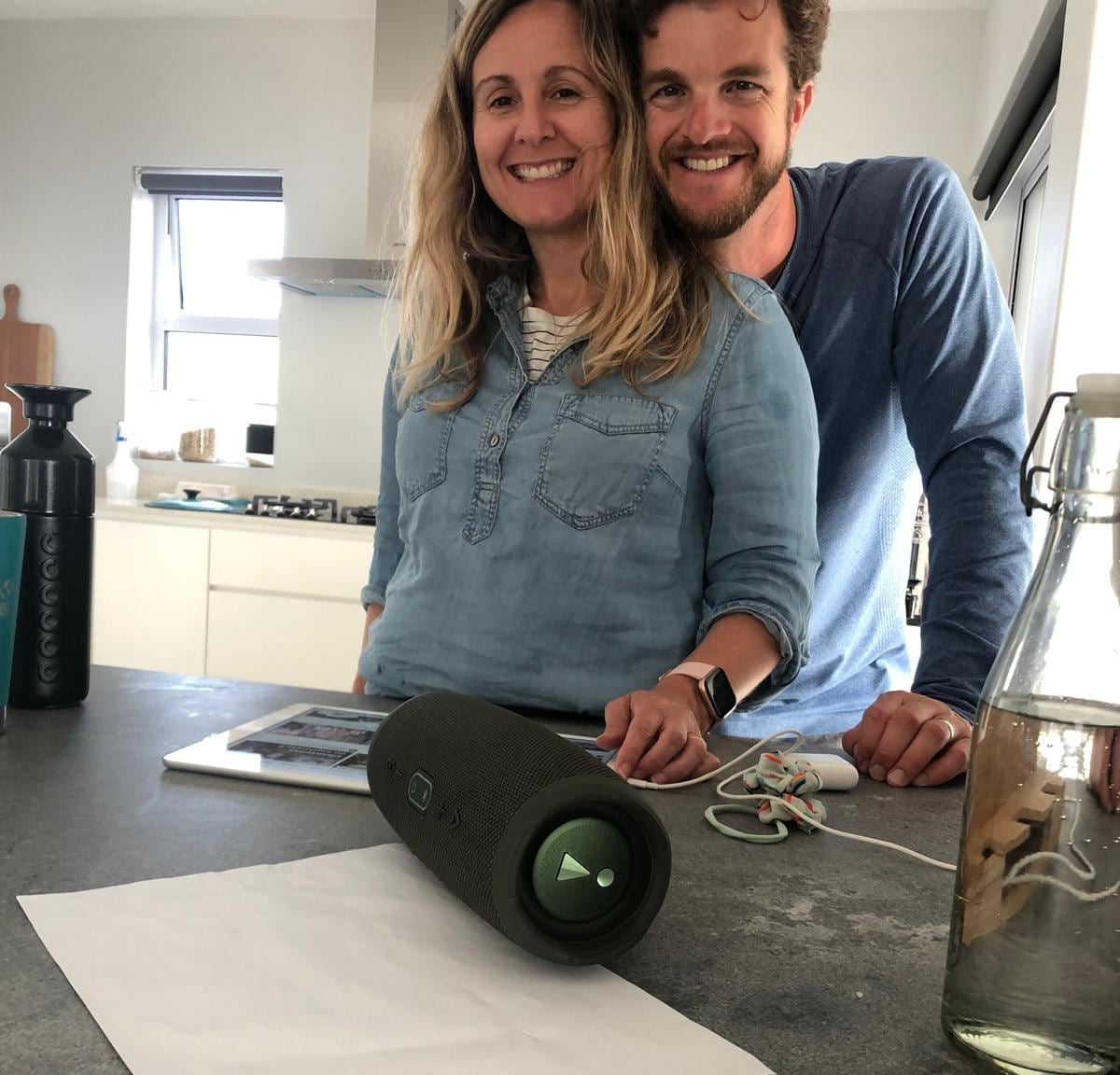
Episode 7 · August 20, 2026 · 45 min · with Brad and Aubree Stafford
Show notes
After 18 years of homeschooling, we've realized the best part of homeschooling is being able to question EVERYTHING! Sometimes it was out of necessity..."do we really need all these clothes?" Sometimes it was out of pure Biblical conviction. In this episode we discuss the importance and true FREEDOM that questioning gives you and your family especially when tied in with homeschooling.
Transcript
The whole conversation, 45 minutes, to read or search.
The opening clips, from later in the episode
Aubree
Often with your first baby, you have no clue what to expect.
Brad
Really how the insurance is just a scam.
Aubree
Those basic competencies, they don't fulfill that anymore.
Aubree
Because you don't want it to be video games or reading.
Aubree
You just have [unclear].
Brad
Welcome to Outside the System. I'm Brad Stafford, with my wife Aubree, and today we want to talk about something that's very important, near and dear to our hearts, is questioning everything. So questioning everything has led to us leaving the country, medical changes, food changes, homeschool changes, life changes, like college. All those things have come into play in terms of questioning. So what I want to discuss today is, how did we get here? We're okay to question everything, where not a lot of people feel confident to say, "I'm gonna question the way that we always did it."
Aubree
Yeah, and I think, obviously, people are homeschooling, or they're interested in homeschooling, they're starting to question things, right? I think we're all on our own journeys of how much we're starting to question things. So I think homeschooling is something that a lot of people can see how the government schools are not effective. Like, if you're just measuring on what they're supposed to be accomplishing, which would be reading, writing, arithmetic, those basic competencies, they don't fulfill that anymore. So I feel like that often gets people started, being like, "Oh, wait a second, every single year it's worse. Why am I putting my kid in this?"
Brad
Yeah, and then it's weird. And then it's like, what else did I just assume was okay that's not actually okay? So I think for us, going over to Cape Town was a big one for us too, because we had already started with the food for us. We started doing raw milk.
Aubree
We talked about that before, where we really started just questioning, why do we drink milk? Every single thing that would be beneficial about it is [unclear] out of it, and then they add certain things back for us to drink. So we started questioning that early, and then we went to Cape Town. I think for me, the biggest thing I started to question was just how I was having babies. Because by that point, we had had four babies at the hospital. I had normal... it was a vaginal birth, not natural, in the sense that I got epidurals for every one.
Aubree
And then what got us to even start questioning using a midwife was that our friend there warned me that a lot of the Americans that were there ended up going to one specific doctor, and he had like a 75% cesarean rate. It was just, they were all having cesareans, and so she said, "If you don't want to have a cesarean, maybe start checking out a midwife." And I even remember talking to my OB-GYNs back in Maryland, because still, I wanted the expert to reassure me. I remember they were like, "No, you'd be a great candidate for a midwife, because you've had uncomplicated, uneventful births, quick, even with medical intervention," which, we look back, was such a blessing.
Brad
Yeah, it always is.
Aubree
But that's how I started to question just how I was having babies. Like, I never... I think I had one aunt who had, maybe two aunts who had natural childbirth, but in a hospital. But it was never even a question of, would you... I never questioned with the first four kids. Why wouldn't I? But I guess after the first one... well, the first one, I think, often with your first baby, you have no clue what to expect. There's none. And so you get there, it's painful, you're having contractions.
Aubree
And I can remember with Micah, I had gone, I was actually pretty far along, and looking back, I was basically having transition contractions. And they... no, no, that's at the hospital, remember? And the lady looked at me and she's like, "So, if you want to get an epidural, this is the latest that it'll allow you." And I was just like, "Well, I don't know how long is this going to last." And I just wasn't in the place where I could say, "No, I'm gonna power through it." Looking back, I could have, because I was already pretty close.
Aubree
But then going to South Africa, where I think for Americans, we just think that everything is like we have in America, where every time you go to a labor and delivery ward in the United States, every time I have, it's basically like a beehive. Doesn't matter what time it is. You go there, there's people, multiple people at a desk. There's people walking around the hallways. It's active.
Brad
There's action, right?
Aubree
And you could get an epidural anytime. It wouldn't be like, "Okay, I think I need an epidural," it wouldn't be like three hours later.
Brad
Yeah, it's quick.
Aubree
But then in South Africa, I remember talking to the midwives, because I wasn't completely sold on the medication-free labor. And I remember them saying, "Well, you won't be able to just get an epidural if you want one." And it was interesting, if you think back about it, talking to these women that were midwives, and that was their career, obviously very knowledgeable, and then talking to me as an American, being like, "I can't just get pain relief when I want it? This is how this works?"
Brad
"We don't have drug dealers on staff, on call." Like, "What if I need drugs now?" "Oh, it'll take you planning and organizing."
Brad
But even, I think, for me as a dad in that situation, with all... really, up until Susanna, who was born over there, I had pretty much taken a back seat and gone, "Well, I guess this is normal. Okay, I'm fine to just travel along." And it wasn't until Susanna that I'd seen you have enough babies to be able to tell our hippie midwife, "Get your butt in there, there's gonna be a baby in five seconds."
Aubree
Well, the funny part too is that we had no family there, and we had friends, but my water broke, and we had to call a friend because we had four children at home, and they didn't answer. Then our second backup didn't answer. So we were on our third person. And my water had broken, I had started having contractions, and no one had arrived at the house, and [unclear] in the hospital, because I still wasn't sold on the home birth yet.
Brad
There was still that lingering, "This is the way that it's always been done, this is the way that it's safest, this is the way that it's..."
Aubree
There are obviously consequences if you decide to do that. But we had to drive 45 minutes to the hospital.
Brad
We made it fast.
Aubree
Yeah, we made it fast, but then we get there, we had no clue where to go. It looked like the place was closed. Do you remember? We're like, "Where do we even go?" We're having serious contractions.
Brad
I went into a security office. There's some lady sitting around.
Aubree
And it was like two in the morning.
Brad
It was like two in the morning, and I said, "Hey, where's the labor and delivery?" "Go down that way." This is like a door. I feel like I'm breaking into a hospital.
Aubree
There were no lights on.
Brad
There's no lights on, there's nothing. It was like a movie.
Aubree
And we find one woman, one lady there. And again, I think that plays into, they do have a lot of cesareans. So it's a lot of planned labors, especially, I think, at that hospital. So there wasn't a lot of activity. Finally, we find someone, and then our midwife shows up. And I have her very quickly.
Aubree
And I remember just the difference between having had an epidural, where you really can't get up out of bed, you need someone to help you get up, and with Susanna, and the midwife was named Susan, I was able to get in the bath with her, and it was just such a different experience. So that was super eye-opening for me, that I don't think that I would have questioned it in the way that I ended up if I had just stayed with what I was comfortable with, because there wasn't any reason for me to question it. And social media wasn't really... this was 10 years ago. So there was not a lot of social media.
Brad
Yeah, and I think the thing that that did, in addition to a lot of other things, was really look at how the medical community is just a business. And they're always... we know that now. That's pretty obvious now. "You take all these vaccines, do this, do this." It's all very much money driven, as opposed to what's best for mom and baby. And so that was...
Aubree
They can't [unclear] such a large scale, right?
Brad
Yeah, and so that was, for me, another [unclear] "trust the experts, they know best" medically, when it was like, well, there's also just nothing. It seems like you're doing this for managed profits. This seems like managerial pregnancy, as opposed to a normal... because they don't treat you like an individual.
Aubree
Because there, it is mass. It's scaled.
Brad
Yeah, it's scaled.
Aubree
And I think a big one for us after that, which is directly related to it, was insurance.
Brad
Yes. That was a big one.
Aubree
Because we came... we had Susanna, and then I was pregnant with John, and there was the drought there, we were having a hard time renting our house out. So we came back to the United States to have John. And we had international health insurance. Because up until that point, we didn't... no, we had private health insurance that we paid for. So because Brad works for himself, we had to pay for our own health insurance at the time. So I made sure that I had international health insurance that would be good in America. You know, we're paying our premium, whatever, every... is that what it's called, every month? The premium.
Brad
Yeah, the scam.
Aubree
Whatever, the scam, too. Your subscription payment.
Brad
Your subscription to nothing.
Aubree
So we have John. I go to the hospital again. I use midwives, which was nothing like the midwives in South Africa. I have him in the bath at the hospital. We get the bill. I have no medication, nothing. $8,000 with insurance. That was the part that, for me, that was my biggest... because with that same pregnancy, we had insurance. We were paying $1,500 a month.
Aubree
I came and I went to get my blood panel that you get within the first [unclear]. It was $800. And I remember speaking to the lady on the phone and saying, "How can this be $800? I have insurance." And it was because we hadn't been on the insurance for nine months, we didn't have coverage, maternity coverage, yet. So I remember her telling me, "If you had just said self-pay, it would have been like $250."
Brad
And that was like a light bulb for both of us. We're like, "What is this?" If we get sick, all we essentially need is like a drug dealer. We just need, "Okay, I have a throat infection, I need antibiotics."
Aubree
Which happens so rarely.
Brad
So rarely. So over there, from that point on, we spent, and I think I totaled it up to maybe like $5,000 out of pocket for about eight years of living there, for insurance. I had a stomach scope, three of our kids were born over there, stitches, I had to get stitches. John... Abram at one point had a concussion.
Aubree
We had a doc. We had a person we saw, we had a perfect guy.
Brad
But it was that much out of pocket, where we just paid cash. And granted, cost of living is cheaper over there, the dollar goes further over there. However, it still helped us to wean off of that, "We need these experts, we need this health insurance." And so even coming back here, you start to see really how the insurance is just a scam.
Aubree
Well, and I think it's made... it makes you... It preys on people's fear. Well, that's more than... it's like, just in case, for everything. And then think about how, if you're thinking just in case all the time, my thing I always say is, then you should never drive.
Brad
Never leave your house.
Aubree
Never drive a car.
Brad
Just in case you bump your leg on that chair, never leave this chair, hold on to it forever.
Aubree
Yeah, and for me personally, it was that feeling of, I remember thinking, "But we're doing everything right." At the time, it makes you feel like it was more responsible to have insurance. Like, responsible adults have health insurance. You need to be responsible for your children, you should have health insurance. And when you realize that it's actually not for your benefit... because I even remember I was searching for maternity coverage plans. It was the tiny, tiny letters at the bottom of everything. I remember the person I spoke to, I remember saying, "Does this have maternity coverage?" "Oh yes, it does." But he just forgot to admit that it was nine months after you were on the plan.
Aubree
So to me, the delivery without medical intervention was a big one for me. But then the insurance idea, and the idea that the insurance is meant for people, like for older people, people who are having lots of... obviously we'll probably talk about this, but of course, when you're morbidly obese and you need to pay for like six different types of drugs every month, it's nice to have insurance. But if you're a person who is generally healthy, you are under 30... I mean, we were 30. Why are we paying $1,500 a month to have health insurance for us and then our four kids?
Brad
Like, when we rarely, if ever, go to the dentist. And especially now, I think, with... so you go to insurance. If we have issues and we need drugs, we go to our... like, swimmer's ear.
Aubree
It's basically the things we need sometimes: swimmer's ear. I've had mastitis before when we were traveling. It was mastitis, and it was from traveling, like, I knew what it was. I wouldn't want to take an antibiotic otherwise. The sickest I've ever been in my life is, you know...
Brad
But we can go to a telemed, pay $110, $115 for some lady sitting across from you to go, "Okay, here, let me write you a prescription." We go to the pharmacy and say, "Oh, or cash payment," look at the insurance price, would have been more, $200 versus the $10 that we paid, and say, "Cool, we'll see you in like four months."
Aubree
I think it's a hard one for people, because it really has been ingrained in us to think that it's more responsible. And there are lots of different Christian share plans. There's lots of different ways that people... I think a lot of people agree with us that it really is a scam. And also right now, it's actually cost prohibitive. It's super... can't afford to pay, I mean, for those people. Like, we looked up, it was $1,800, and it only covered a certain amount of kids. So that means we had to figure out something else.
Aubree
But yeah, so it just doesn't actually make sense. And when you think about what your essentials are in life, most of us are just paying to have a place to live and food to eat. And then to have to pay that much for insurance. And again, it's another one, and we'll maybe chat about this regarding university and that whole path, is that then they can say, "Oh yeah, well, you don't actually get paid that well, but you have insurance coverage." Yes, that's medical coverage, right?
Brad
Such a terrible carrot that people have bought into. "Well, I've got this insurance." Expensive. And it's also not to say that insurance isn't for everybody, because you could have hard births, like having difficult births where you know you're gonna have C-sections. There's certain things where it just makes sense. However, if you actually do a true familial audit and say, "Okay, let me take fear of catastrophe out of the equation."
Brad
"How often are we going to the doctors? How often am I needing major surgery? How often am I putting myself in situations where I could get bit by a tiger?" Those are the questions that I think... it really is taking a real familial audit to see if this makes sense. So for us, it actually doesn't. And so, because we were risky...
Aubree
Yeah, but even there, I never felt like we were being dangerous. It was never like we were like, "Oh gosh," no, because the healthcare was so affordable that if something happens, we could pay for it. It wasn't like... we stayed one night at the hospital, I had no medication, it was $8,000 in the US, in the United States. That is clearly... that's not an actual value. Like, what cost the $8,000? No one helped me. It wasn't even like anybody helped me have the baby. It wasn't like they were paying salaries or things like that.
Aubree
So, but I do think that being creative, and there are people doing that now, different types of share programs. There's Christian share programs. Because if you are having babies, you can't always foresee what's going to happen. So I think being part of some type of Christian share, something like that.
Brad
But again, our point here isn't to talk people out of insurance. It's more just permission to do an audit of it: in your familial situation, does this make sense?
Aubree
Or even just to say, "Okay, have we ever thought about insurance before? Would I take a job because it had good insurance? Do I need to be thinking in terms of that?" Just things. I think this is our personal experience of the things that happened to make us question certain things, that then led to learning more about things.
Brad
Yes. And just understanding, okay, well, if we're not gonna have insurance, what are the things that we can proactively do? And it's not like, let's replace the $5,000 monthly insurance bill with $5,000 worth of supplements. That's not a fair trade either. You can get to the point where you're over-optimizing, and even just questioning supplements. "Well, why am I taking all these supplements? What is this One A Day? What are these other little things?"
Brad
It's not to say that they're not bad, but I think it's more of... and it's not necessarily questioning everything, it's more of doing an audit of, does this actually make sense? Is this something that makes sense? College, for example, right, school, I think, is a very obvious one. I think the challenge that people have, on social media and all over, you can see the results of public schools, you can see that's pure garbage, right? But I think because there hasn't been a clear alternative... like, for us, an alternative to insurance was just being like, "We're not gonna pay that. We're healthy, we don't need that."
Aubree
Because, obviously, it's just a huge problem in America: our medical system, our medical costs are through the roof. It's like, the value was not $8,000. So there's lots of different reasons why that's happening. But like you're saying, it's saying, "What actually am I doing without thinking?"
Aubree
And I think that's the thing. So, even, I remember talking to my parents about this once before, and they just... especially, I think, that generation, they were just doing what they thought was right, what their parents had modeled for them. So I remember, I think, my dad saying before, looking back, he was like, "I can't believe I put you on that school bus when you were five years old." But it was normal. You look back on all the pictures of people our age, and we had the little yellow school bus with [unclear] your parents' phone number and your address on the little yellow school bus. And looking back now, I can see... I think my parents, they probably, maybe, had a little niggling feeling of, "Oh, she's so little, she's already going to kindergarten."
Brad
But they stuffed [unclear].
Aubree
And I think there was no alternative.
Brad
Yes, and I think what we want to do, especially with this episode, is say, just question it. If you're feeling like that, have somebody to talk to that may be considered a radical person, and say, "Well, should I be putting my kid on the bus?" Even simpler things, like, "Well, do I need all these curriculums?" Just start to question these things in a wise, discerning way. Because the way that it's always been done has led us to here, where medical costs are out of control, school systems are terrible, families are broken up, college is super expensive, and it's a complete waste.
Aubree
And the feeling that, I think, for our generation too, we were part of that generation. Like, I made you finish getting your degree. I got my bachelor's degree, started doing other stuff. I made you get yours. Brad's hated college from the beginning. I'll tell you, you've been early on that. I remember going to cousins' high school graduations and just being like, "Can you just take it down a few notches?" Like, "These kids are going to college. This is such a waste of your time."
Brad
The parents are all like, "Hold on..." [unclear]. I'm just trying to save people. That's all.
Aubree
For us, the question, with having an 18-year-old that has taken college classes, and he did really well. So, but for us, it's not the worry that... and he had never taken a test before, ever. And so he was in college classes, and he did really well. But really, college is not what it used to be, in the sense that it used to be something that was really not available to everyone. You had to have a certain level of intellectual capacity, grades, and you were going toward a certain career. Now, anyone and their mother can go get a college degree. It's literally... it doesn't have a value associated with it.
Brad
It's rice paper.
Aubree
Right. With the money that it costs, the money's gone up, yet the actual content of their learning has gone down every time. I saw, I think it's in Weapons of Mass Instruction, or maybe it was something else, where they actually say they've done studies where they test students going into college, and they perform better on certain...
Brad
Yeah, better than the year after. It's like they've been... And I think now, we're in really such a blessed time, that that's so obvious, and especially with AI and all these things, outsourcing of American jobs to overseas for cheaper things. There's never a better time to not put your kid in college than now, because there's gonna be massive opportunities, society is gonna shift. We're already bucking the trend of, you know, "college is the only path," of Gen X. So I think we're in a different situation.
Aubree
Because I think we were still products of... you know, I think when you graduated from high school, they would be like, [unclear]. And John Taylor Gatto talks about that in his book, of just, like, think you're that 2%. What does that automatically do? Is it making it seem like you're not smart enough to go to college? Where I think now, people see with anything, if something is going to be valuable, it means that not everyone can do it. Not everyone can have it. If it's supposed to be valuable, then it has a value that not everyone... it's not accessible to everyone. So now the college is accessible to any person.
Brad
The bar couldn't be lower.
Aubree
It couldn't be lower. Anybody can go to college and get it.
Brad
It couldn't be lower. And I think what it really does, and Mike Rowe talks about this, is really the value of trades. And really, especially with homeschool, the purpose of homeschool isn't, in our opinion, and hopefully yours, to get them to get a college degree. It's to train them to learn, because you're learning every single day. What is the foundation from which you're building upon your education and understanding of the world, and then how do you apply that outside of your home and in your world? And so with the trades, it's not to say that those people are dumb. In fact, those guys are probably... they have skills, they [unclear]. They actually have skills that can't be replaced with AI. Driving a truck, fixing HVAC, electrical stuff, plumbing.
Aubree
Carpenters, people who make things. I think in our world now, that attracts a lot of people, because so few of us can actually solve those kind of problems that actually impact your everyday life. Like in Florida, if something happens to your air conditioning, you have to call someone. So, but what we're saying is that we've started thinking differently about that, where if you had asked me probably a couple years ago, I would have said I expected most of our children to go to university. And now I think, obviously, we can see a big part of it is that the university, like, what do they produce? They just often produce people that have often become more radicalized to progressive ideas.
Brad
You know, we know so many people who have Christian kids that have gone to college, and then they come back from college and they really don't respect their parents: rejection of the parents' conservative beliefs, rejection of their Christian beliefs.
Aubree
Yeah, and the idea that, it's always that thing of, they want you to think that they're teaching you to question in university. Like, they're the sage ones, they're the ones that have all the wisdom, and it's you little plebs that have been taught to think like your parents that are the stupid ones. And one of the things for me is, I just wanted our children to be able to... because I think for me that was a personal one, where being in public school, and having my parents be able to tell me things that they believe to be true, but they didn't have the understanding to explain to me those truths.
Aubree
I wanted our kids to be able to go into a college classroom and to be able to express themselves clearly of why they disagree, and actually why they thought the other people were stupid. Like, that's one thing we've really... we've made them a bit aggressive on certain things. But looking back, I think that's because you have to have a little bit of aggression.
Brad
You can't just... you have to fight for... I think that's the thing. You have to fight for the position. And I think a lot of those parents, they outsource their Christian education to the state, or private school, or their Sunday school, coloring book Sunday school, right? Like, "How can we have fun cool-guy camp?" Which I hate, which obviously produces garbage. It produces garbage. That is an indicator of those parents not raising up their children correctly.
Brad
It's more of an unfortunate side effect of not questioning, is this the right thing to do? Like, "Oh, we just normally put our kids into Sunday school, and we just trust that that's gonna take care of it." And by God's grace, some kids come out of that okay, but sometimes, like me, with a jughandle back to the truth.
Aubree
It's like Voddie Baucham: you can't be surprised that you send your children to Caesar, and you're surprised they come back Romans. And he was saying that like 20 years ago.
Brad
Yes. So he got kicked out of the SBC.
Aubree
Right. So now, to see where we are now in the world, and to think that your children aren't going to be... even if you feel like you've really, really done an adequate job, by the time they're 18, it's still the idea of sending them someplace else, to then have to fight on their own at 18, where they don't have the support of you there, your family, I think the church community. That's a lot of pressure for an 18-year-old. And people can be persuasive. And I think as Christians, we have to be able to actually say, "Actually, no, there's just one truth." And we have to be able to stand on that truth. And I tell our kids all the time, I think we live in a time where, thankfully, we're able to see the fruits of all those different types of worldviews and ideologies that are played out.
Brad
Yes. So we can see it all. COVID was the great divider. So you would look at a church and go, "Oh, that's an okay church." COVID hits, they're wearing masks, they're wearing masks on the beach, they're promoting the vaccine, they're singing with masks on, they're happily pivoting their entertainment show to Zoom, and you go, "Uh, yeah, that's clear. Thank you for showing me who you are, and how you actually have zero backbone to stand up against Satan in the culture."
Aubree
So we talk with our kids a lot about how, when you don't have God on the throne, then you're gonna put something else there. And so the state is what people have put there. So that's why we are questioning all these things, because when you see that you put the state on the throne for education, and the state determines what type of education is appropriate for your child, and then the same thing with universities, they're the ones that... we're trusting these people for what? To do what? And especially now, where it's not even like having a college degree and having all this debt is gonna get you a job.
Brad
There's so many anecdotal examples, online, in real life. How often have you tried to get a job? "Oh, here, let me take my resume and put it in there." "Sorry, we took the H-1B visa, or we took the diversity hire," or, you know, there's so many people with a college degree. There's just so... if you're just gonna do anything, right?
Aubree
Because remember, that was the thing they would say to our generation: "Well, there's gonna be all these applicants, and the college degree is just gonna give you that next step, right?" And so you're like, "Okay, well, I need that next step." But now everyone has one, and then it's, "Okay, well, now you need a master's degree, you're gonna need to go back to school and get a master's degree." Scam. It's a scam. So we're questioning a lot of that with our kids. Is the goal university? And also just because it's so, again, cost prohibitive. Either your parents are paying it, or you're getting a loan.
Brad
Yeah, and to start your life with a loan, in debt, just for what? You know, I think especially with the cost of living nowadays, you're never gonna leave home. And it's not to say, and this is a caveat, it's not to say college and university isn't for everybody.
Aubree
No, exactly.
Brad
But I think putting your kid in college and going, "Find yourself, find your direction," is dumb. It's dumb. You know what direction they find? Drinking, partying, Marxism. That's the direction that usually happens. So you have to well prepare your kid and say, "Okay, well, these are..." and especially looking at your kids and saying, "These are their skills and abilities. Where can we help them?" It's not, "Oh, you're 18, see you later." It's still our responsibility to help guide them and help them to make better choices. The guardrails space out a little bit from when they're younger. However, we're still there to say, "Okay, that's dumb."
Aubree
But I think that's another big problem with college, is that if your kid goes away to school, they're on their own, they feel very adult, they're making all their own decisions, they don't have anyone that they need to actually be submissive to in an authority structure, in the way that they would a parent. So obviously they feel adult, and really they're not, because probably someone else is paying for everything. So they have this feeling of, "I'm an adult, I make my own decisions." They don't have parents there to help guide them.
Aubree
Because that's the thing, is that as an 18-year-old, you are probably gonna make mistakes, and if you have parents that are there to help you with that, you're probably gonna make less mistakes. I think that's one thing we've talked about a lot. You hear a lot of people be like, "Oh, they're 18 years old," and you're like, "Yeah, but the mistakes they make as an 18-year-old are going to impact them for life." It's not like the mistakes you make in college, or when you're 18, are just little tiny things that don't actually matter. They're often things that impact you for a long time.
Brad
Yeah, and I think especially with girls. I know some examples where the parents are like, "Well, she's 18, not much we can do." Bad relationship, bad relationship, bad relationship.
Aubree
There's no parents there to help sort that out. And so that's another big thing we've questioned, is just the transition from teenager to adult, and how, in today's society, we have a response to the questioning.
Brad
Questioning, like, "Okay, this is the trajectory that we thought was the right one. What is the right one?" And it really is analyzing your kid, looking at the network and resources around you, and understanding, "Okay, they have to get jobs, they have to move forward in their lives, they have to find spouses."
Aubree
And I think for a lot of us too, it's like we think, "Okay, 18, figure out what you're gonna do for college, and then you start that job." And now, I don't remember what the exact statistic, but so many people now change careers. I mean, completely change careers. So just imagine you've gone and you've spent, I don't know, $100,000 to go to college to get a degree in history or whatever, or communications or something like that, and then you're like, "Ah, 10 years in that," and they're like, "Cool, ready for something else." So it's not as if we're getting these educations that are very well-rounded. And the idea with homeschooling is that you should be able to educate your child well before university. So that's another thing where I'm looking at these classes, I'm like, "Micah would be bored."
Brad
He would. He already knows all these things. He doesn't need a person to tell him... What is the purpose of paying for these credits to get these degrees? Isn't the purpose of education to learn? Or most times, they tip their hand, where, "Well, you gotta take these prerequisites." "Well, am I learning anything there?" "That's really not the point." That's basically just getting our base subscription model paid for, so we can keep the scam going. Your first year is paying for marketing materials for the next generation of suckers.
Aubree
Right. I think we've learned that you can do so much learning on your own, and really, it is just letting go, and I speak to myself, and I say this too, letting go of the value of that piece of paper. That there is no inherent value in that piece of paper. What you learned at college, it doesn't mean that everything you learned was a waste, and there are definitely careers that would need to go to university. But for most people, is it necessary, and is it good? And could you do something else that you wouldn't need university? And I think also, like you were saying with COVID, I think a lot of people don't want to go into the type of big company, mid-level management. You're making good money, but you really don't have any freedom.
Brad
It's golden... they're golden handcuffs. And actually, it's also to the point of thinking about the different paths. So let's say your son wants to be a lawyer. We have a great friend, Justin, who was so wise in his...
Aubree
I wanted Micah to be a lawyer.
Brad
Yes. So wise in his counsel to Micah, that basically said the high level, "We gotta go to Princeton, you gotta do those things," is foolish unless you want to be part of the machine. Unless you want to be tied in with Morgan & Morgan, ambulance-chasing drug addict Morgan & Morgan.
Aubree
They're just advertised literally every, like, hundred feet on the Florida highway.
Brad
I question billboards. I hate them. But that's the other thing, is taking that step back, because if Micah wanted to go that legal route, which he might want to do eventually, you know, we're like, "We'll figure that out." There's other paths that you can take. It's, "Get the cheapest degree that you can, get the cheapest law degree that you can, because nobody cares." If you have an understanding of where you want to go in law, for example, Justin does business law and he does extremely well. He knew the trajectory that he needed to get there.
Brad
If he would look back, and this is part of the counsel they gave Micah, is, "I'd do a little bit different. I would have changed my first couple years here, I would have done this different." So it's like that sort of counsel to say, especially nowadays, where are you going? Where do you want to go? And then what is the normal path? And then what other paths are there to get you there, that are going to be cheaper, that are going to be more rapid, that are actually gonna be more beneficial? And in Micah's case, he's like, "Do I actually want to be a lawyer? Do I want to do this?"
Aubree
For us too, it's a big one. When you watch Charlie Kirk, who's always talking about university, and just really, it's like a scam. It really is. Again, it's not like all universities are bad, that you should never go to university, but it's one of those things that we, as a society, have not questioned. Most of them, we really haven't questioned. And do you need to decide that at 18? There's so many different ways you can do things. And rather for our oldest son to go, say, "Okay, well, let's just have some jobs. Get some different jobs, try some different things, see what you like, and go from there." So university was a big one that we started asking questions about.
Brad
Yeah. But it can really be applied to wherever the listener... and wherever we, as you face these different sorts of, "Well, this is how it's normally done," even with holidays, even with your own family, even with, "Oh, well, on holidays you have to drive to everybody's house," just start to question those things. And I think family audit is like when somebody says, "Oh, I just don't have enough time to read." Okay. "Well, how much TV are you watching? Let's do a time audit of what you're wasting your time on, smoothing out your brain." So it's like a family audit, time audit, to say, where can I... not necessarily optimize for optimize sake, but question, to say, where are the different things?
Aubree
Right, right. So what will your priorities be? And when you're homeschooling, your priorities, they actually augment, because now you're doing school at home. So what was once a place where you went out, it was like the hub, but everyone went out, went to their own places. Now everyone's at home, and that's our norm, right. But for us growing up, it wasn't the norm.
Aubree
So it has actually been really fun to create our own family norms, our own family culture over the years, and each family is gonna look a little different. But one of the things that we always recommend is just spend a lot of time reading. If you just make your house a place where there's books all the time, and you just have to be kind of ruthless, but try to really keep the other stuff out, because you don't want it to be video games or reading. We just never even gave them the opportunity for video games. We never had video games. They would play video games with my parents sometimes. My parents had a Wii. That was kind of fun, with the tennis. We would play that together.
Brad
But no regrets on that side.
Aubree
Video games is one thing I will go hard on. I just don't feel like the benefits of video games versus negative, to me, not even close.
Brad
No. And don't let people who are idiots scam you into believing that it's actually a good trade. Like, "Well, they have to..."
Aubree
But the question thing, like, question: your kids don't have to play video games. They don't. And guess what? They're not gonna be like, "Oh my gosh, I'm behind on technology." It is funny when our kids do go play, because some of their other cousins will have video games, and they're funny because they're not good. But they laugh at it. They're like, "I have a lot of other skills that are way more important than being able to play whatever, Fortnite." Is that the...?
Brad
There's all kinds of fun... Fortnite? There's all kinds of fun games that'll suck up your time.
Aubree
There's another one. Question the video games, just don't allow it. Focus on bringing lots of books into your home. You try to read books, and I know it's a hard one. I've talked to a lot of women who, it's just hard when you haven't been in the habit of reading.
Brad
I think dads, too.
Aubree
Oh yeah, but it's hard for everyone, because most of us did not grow up with a reading habit. So, and I will say, just choose any time of day and just sit there for five minutes with a book. And again, it's that idea of modeling for your children what you want them to remember of you doing, right? You want your kids to remember certain things. So if they're going to read, they need to see you reading. Read to them. So just make it, do it as a family thing, and those habits will come as you build them.
Brad
The kids reflect the model that's in the house. And so if you want your kids to be readers, you're gonna have to put down your phone, you're gonna have to turn off the TV, you're gonna have to find books.
Aubree
Also, your kids will be fine if you don't give them phones either. So don't give them phones at all.
Brad
Question.
Aubree
Just try, just don't give them phones when you go out. They don't need phones at the grocery store. They don't need phones in a car seat.
Brad
Most people know that. I think it's just permission to start.
Aubree
I don't know.
Brad
I think it's also, and this is something that's also important, is building your own mental case against that thing. So building your own mental case...
Aubree
So you can explain yourself to people when they ask me, like, "Why are you not...?"
Brad
I've... we built our mental case pretty early, and I may go a little aggressive on my closing arguments. However, I've built a mental case, and I'm like, "Fight me. I'm ready, I'm ready to argue over this." Same thing with the medical stuff.
Aubree
I don't know that the phone... the benefit of a phone for a child, there is none. It's just a convenience. I remember talking to a lady in the neighborhood a while ago and just asking her, like, "Why do you think people do this?" And she just... it was just easy. I think it's... remember, it's like dopamine hits that these people are getting. So it's something that they're feeling the reward from. So even the adults on their phone are getting a reward. When they're on their phone, they don't have that time.
Brad
The hard thing is, it's actually the parents. Like, if the kids... "Well, you know, they..." No, you're not leading your kids well.
Aubree
They don't want God to tell them what to do, they don't want to obey God's laws, but they'll happily obey the state's laws, which is just wild to me. The people will be like, "Well, you know, we shouldn't have to obey the Ten Commandments," whatever. But they'll be like, "But listen, if the government wants to tell me that I have to stay in my house for so many days in a row, I'll gladly do it." It's just wild. We talk about this a lot with our kids, because it will be interesting to see: will the government pass some type of law? Like, I think they have, restricting the age of children on Instagram or TikTok, whatever those things are.
Brad
Yeah, well, the government in Australia, maybe.
Aubree
Yeah, like, will the government do that in America?
Brad
Maybe in the UK. No, what they did in the UK was like an anonymous thing, so you can no longer be anonymous online. Didn't they also do, like, you can't do something under a certain age, like you can't use... I think so. But that is another thing, you just, like... why? Right? Why don't you... you aren't doing anything?
Aubree
That's why: because the parents aren't doing anything, and then we see the consequences of the children on Instagram and social media, right, which are obviously bad. But then the parents can't do anything, and they just look to the state to do something for them.
Brad
"Well, I can't stop them. Can you help me?"
Aubree
"Well, sure."
Brad
And the thing is, it's almost like the Flock cameras, where the idea is, "Oh, they're helping protect you from... you know, if you're not doing anything wrong, what are you scared of?" Well, the state at one point determined going outside without a mask was wrong. So guess what? I don't trust those people, right? And I don't trust that. So I think that's the same thing with the phones, and leaving that responsibility... because essentially it's like picking a fight, but you have to build your own mental case against whatever that thing is.
Aubree
Yeah, and it's easier, obviously, when you're homeschooling, because you don't have the social pressures for your child at school. So you don't have to worry about what someone's gonna say to your kid because they're the only kid without a phone. You just... don't have any friends that have them.
Brad
Ta-da. Ta-da-da-da. Well, that was fun. Nice chat. That was a nice little chat, my dear. So, key takeaways. College is a scam. Question everything wisely, question why you're doing something. Question why you're doing these things, think things through. Reach out to people in your church, reach out to us, start to find people who are doing things radically different and go, "Well, why are they doing it that way?" And not necessarily to attack, right?
Aubree
But just to find out. It's more to say, are the authority structures in our world actually good?
Brad
Yeah, I think that's just part of discernment. So use discernment in your questioning of everything. Because nobody wants to wear a tinfoil hat, but sometimes you have to. All right, see you next time.
Aubree
Goodbye.
Cleaned for reading from the episode's automatic transcript: filler words and false starts are left out, nothing is added. The recording is the record.